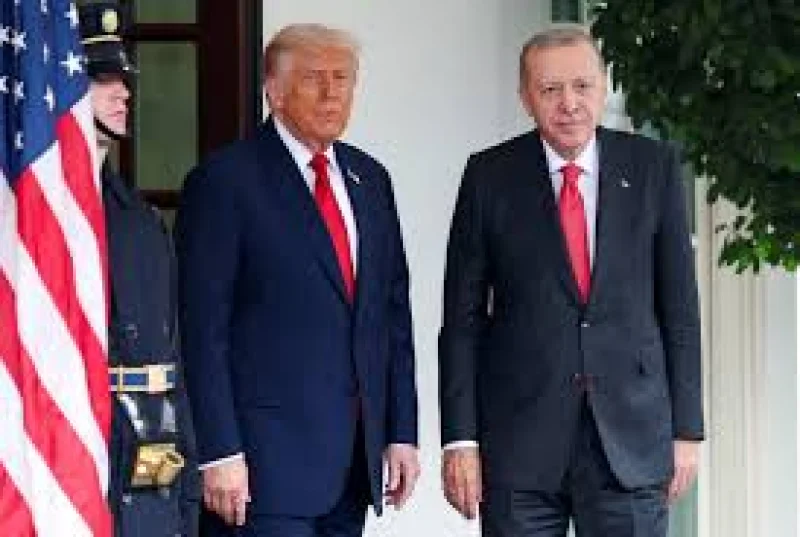
Turkish President Recep Tayyip Erdoğan held a teleconference with U.S. President Donald Trump and a wide circle of regional leaders on May 24 to discuss Iran and the broader Middle East, in a call Ankara cast as another bid to keep the region from sliding into deeper confrontation.
The discussion brought together Bahrain’s King Hamad bin Isa Al Khalifa, United Arab Emirates President Sheikh Mohammed bin Zayed Al Nahyan, Qatari Emir Sheikh Tamim bin Hamad Al Thani, Egyptian President Abdel Fattah al-Sisi, Saudi Crown Prince Mohammed bin Salman, Jordan’s King Abdullah II, Pakistan Chief of Army Staff Asim Munir and U.S. Cabinet members. Erdoğan said Türkiye had always defended resolving problems through dialogue and diplomacy, and said Ankara was pleased that the diplomatic process with Iran had reached the level described by Trump.
He said a possible agreement would support regional stability if it secured free passage through the Strait of Hormuz, a chokepoint that carries immense weight for energy markets and trade. Erdoğan also said such an outcome would ease pressure on the global economy, underscoring how the Iran file reaches far beyond the immediate diplomatic circle and into shipping, oil prices and the wider regional balance.
The call comes as Ankara presses its latest diplomatic effort to keep channels open on the nuclear file and on broader tensions involving Iran. Erdoğan said Türkiye was ready to provide all necessary support during the implementation of any agreement that could be reached with Iran, and said appropriate solutions could be found over time on difficult issues.
That message carries a limit as well as an offer. Türkiye is positioning itself as a facilitator of peace across the region, but the issues it says can be solved over time include the nuclear file, one of the most sensitive disputes in the Middle East, and Erdoğan’s appeal depends on whether the parties involved are willing to turn conversation into a binding deal. For now, Ankara is betting that the next phase will be measured in negotiations, not escalation.