


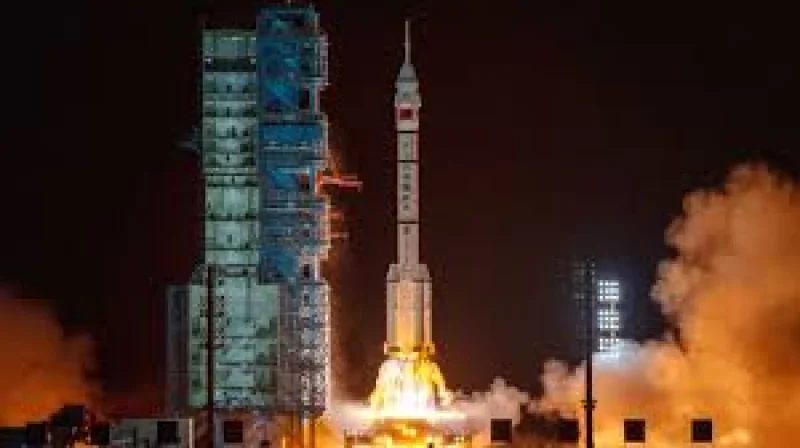
China launched the Shenzhou-23 mission on Sunday, sending three astronauts to the Tiangong space station and putting a former Hong Kong police officer into orbit for the first time. The Long March 2-F rocket lifted off from the Jiuquan launch centre in north-western China.
Lai Ka-ying, 43, became the first astronaut from Hong Kong to go into space. He was joined by Zhu Yangzhu, a 39-year-old space engineer, and Zhang Zhiyuan, a 39-year-old former air force pilot. Zhu and Zhang were both traveling into space for the first time.
The flight matters now because China is not treating it as a routine crew swap. One astronaut will spend a full year in orbit for the first time, with that crew member to be named later, as Beijing pushes to learn how long the human body and spacecraft cope with prolonged weightlessness. A year in orbit pushes both hardware and humans into a different operational regime compared with the shorter Shenzhou missions of the programme’s earlier phases, as one space expert has noted.
Until now, Tiangong crews have tended to remain in orbit for about six months before being replaced. This mission is meant to stretch that pattern and gather data for scientific projects in life sciences, materials science, fluid physics and medicine. It also fits into a larger Chinese plan that reaches far beyond low-Earth orbit.
China aims to land astronauts on the moon before 2030, plans an orbital test flight of its Mengzhou spacecraft in 2026 and hopes to have built the first phase of the International Lunar Research Station by 2035. It also plans to welcome its first foreign astronaut, from Pakistan, to the Tiangong station by the end of this year.
The tension in the programme is clear in the gap between what China wants next and what it has already proven. Tiangong has become a working platform, but a year-long stay is a harder test than the six-month rotations that came before it. If the mission succeeds, it will give China more than a symbolic first for Hong Kong. It will give the country a longer answer on whether it can keep people in space safely for the missions it says are coming.
