
Islamic Relief Worldwide said its qurbani donations reached 3.2 million people in 29 countries last year, as the charity marked Eid al-Adha and warned that rising hunger is colliding with deep cuts to aid budgets. The group said the meat was distributed to vulnerable people who are most in need, and that for many recipients it was the only meat they would eat that month.
The charity said qurbani is one of the largest annual acts of charitable redistribution in the world and a vital source of protein for people at risk of malnutrition. It said many who receive the meat would otherwise go hungry, at a time when global hunger has doubled again over the last decade and around 673 million people do not have enough to eat and regularly go hungry.
Islamic Relief's chief executive, Iftikhar Ahmed Shaheen, said that as Muslims around the world mark Eid al-Adha, qurbani plays a vital role in tackling global hunger while many governments cut aid. The organization said governments are slashing humanitarian and development funding with cuts of up to 45% globally, worsening a food crisis that is already squeezing millions of households.
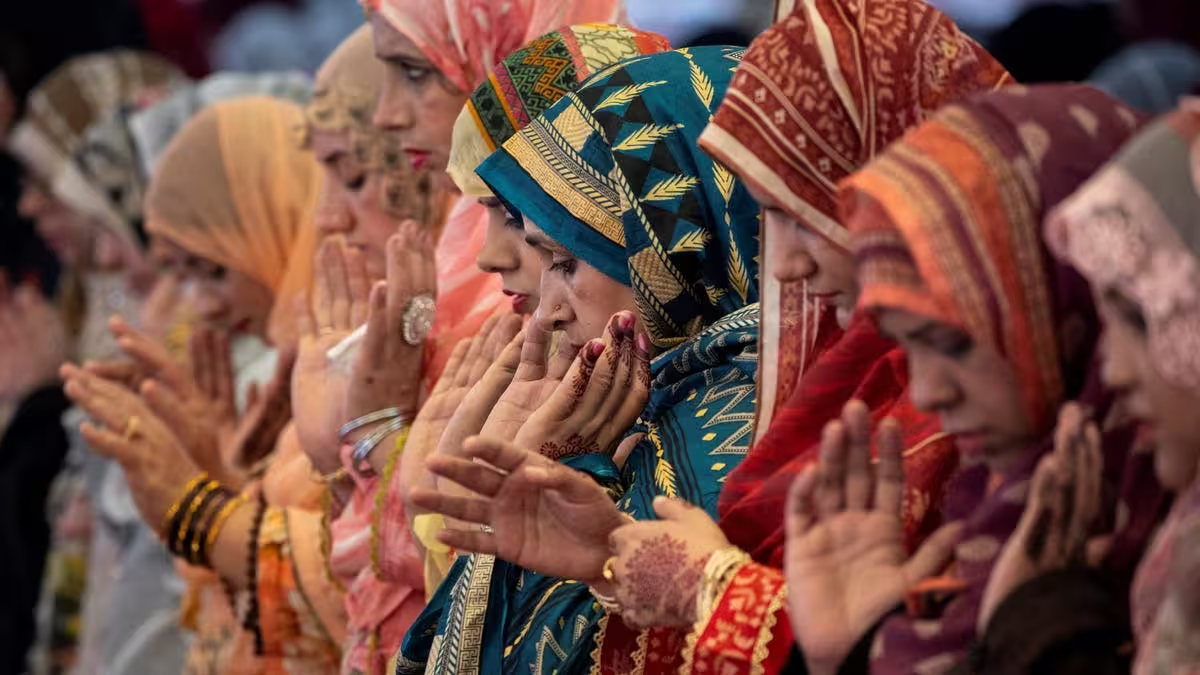
The pressure is not confined to one region. The charity said the Middle East crisis is further exacerbating hunger far beyond the region, adding to a wider strain on food systems and emergency assistance. That comes as about 8% of the world’s population is facing serious food insecurity, according to the figures cited by the group.
Islamic Relief also pointed to a longer-term effort in rural Mali, where its Qurbani Plus approach links livestock, agriculture and finance to strengthen food security and livelihoods. The charity said the program is improving the social inclusion and economic empowerment of women, while families are seeing tangible gains in both income and nutrition.
In rural Mali, the average monthly income of families involved in the program has more than doubled, and the number of children eating a decent diet has also more than doubled. The contrast captures the gap the charity is trying to bridge: immediate relief for people who would otherwise go without, and slower changes meant to keep food on the table after the holiday has passed.
That dual approach is what gives qurbani its weight this year. The meat distribution meets an urgent need during Eid al-Adha, but the deeper test is whether the money and livestock behind it can do more than one meal's work in a world where hunger is rising and the aid system is shrinking.