The University of Arizona is launching a new executive training program for military and civilian leaders aimed at the kinds of threats that are changing warfare at speed. The program, called Advanced Education in Terrestrial Operations and Space, or AETOS, was announced Friday and is set to begin in July.
David Hahn said the program is meant to meet a critical need in the defense of the homeland. He said the threat picture has shifted fast, from drones to thousands of drones, from low-cost mass-produced systems to high-speed missiles, and that AETOS is meant to help participants think through how to defend against that shift.
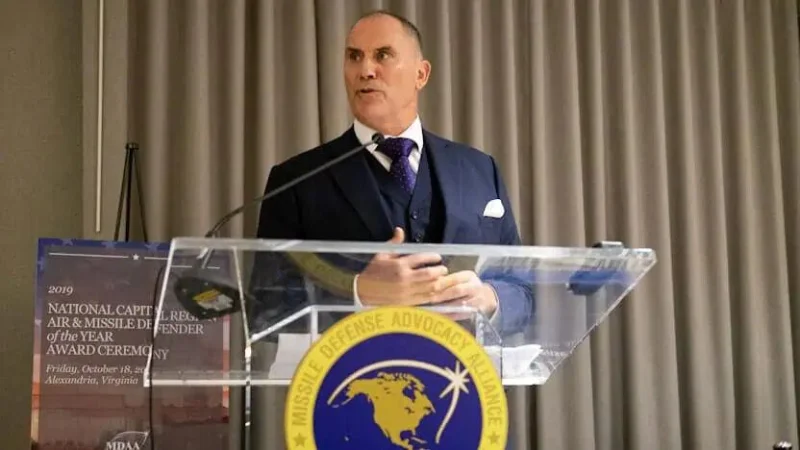
The College of Engineering is creating the program with the Missile Defense Advocacy Alliance. The training will run in eight-month sessions and is expected to bring together university faculty, staff and students with participants drawn mostly from the uniformed services. Hahn said the university wants to make it a consistent yearly program.
He framed the effort as broader than any one agency or political debate. “This effort isn’t a political or partisan effort; it’s a homeland security effort, it’s an American effort,” Hahn said, adding that the university is trying to combine expertise across campus with the experience of service members taking part in the program. He described it as a “wonderful marriage of military experts.”
The curriculum will focus on technology threats, opportunities and policy challenges tied to near-space and terrestrial operations. That puts the program at the center of a fast-moving debate over how the United States prepares for conflicts in which inexpensive drones can be deployed at scale and missiles move faster than older defenses were built to handle.
Riki Ellison, who helped create the program, said the problem is already here. He pointed to the March 1 Iranian drone attack on a tactical operations center in Kuwait, where six U.S. Army Reserve soldiers were killed and more than 20 others were wounded, as evidence of what can happen when defenses fail. He also cited the Russian war against Ukraine as another example of how automated drones are reshaping combat.
“The damages on the defensive side of protecting our bases forward were real, and our ability as a nation and as a world to be able to defeat low-flying drones that are cheap and at massive scale is a challenge right now, and we have to figure out how to defeat that,” Ellison said.
Ellison’s ties to the university run deep. He grew up in Tucson and has family connections to the University of Arizona. He played on a state football championship team at Amphitheater High School, won the 1978 national championship and two Rose Bowls at the University of Southern California, then spent 10 years in the NFL as a starting middle linebacker with the San Francisco 49ers and the then-Los Angeles Raiders. He won three Super Bowl championships in 1984, 1988 and 1989.
For Arizona, AETOS is more than a new class offering. It is a direct response to the current threat environment, and the university is betting that the mix of academic research and military experience will matter when the next drone swarm or missile attack tests America’s defenses.