


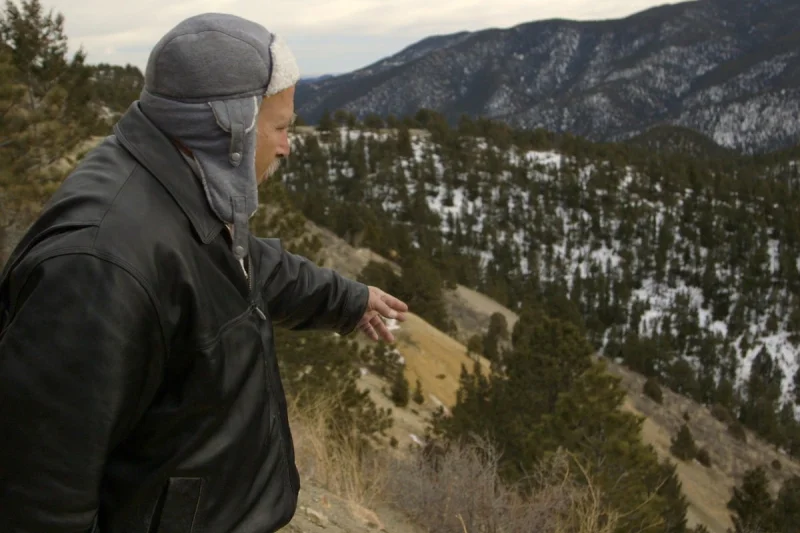
A four-part Investigation Discovery docuseries arriving May 25 is reopening one of the strangest identity mysteries in recent memory: the story of the man found unconscious behind a Georgia Burger King in August 2004 who came to be known as Benjaman Kyle. The series, The Many Lives of Benjaman Kyle, follows Eric and Shannon Evangelista as they try to help him piece together who he was before he woke up with no memory of his own name.
When he was first found, hospital staff described him as naked and bloodied. When he woke up, he said he could not remember who he was. The nickname B.K. Doe, short for Burger King Doe, stuck, and he later began identifying himself as Benjaman Kyle. In 2015, he was identified as William Burgess Powell, a man who disappeared from Indiana in 1976 and resurfaced nearly 30 years later behind that Georgia restaurant.
The identification did not settle the case. Powell has publicly maintained that he suffered from retrograde amnesia, and he has not been arrested or charged with any crime. He does not appear to have any criminal record, according to reporting cited by the article. The docuseries says his whereabouts are currently unknown, and the filmmakers are asking anyone with leads to contact Hot Snakes Media.
That uncertainty is what keeps the story alive. Shannon Evangelista says the key unanswered question is where Powell was from 1983, when his Social Security earnings stopped, until 2004, when he was found behind the Burger King. She said, “We’ve never stopped, and we’re still investigating,” adding that the public may be able to help fill in the missing years. Eric Evangelista, who spent 14 years as a broadcast news producer and newspaper journalist before turning to filmmaking, said Powell’s condition looked like “a very outdated form of amnesia that you only found in old movies and soap operas.” He also said that when they started pressing Benjaman, “This guy’s full of it, and we need to go further.”
The series does not bring closure so much as sharpen the mystery. Powell vanished from Indiana in 1976, then disappeared again into a silence that stretches from 1983 to 2004, and the central question now is whether the public can finally help account for the missing years.
