


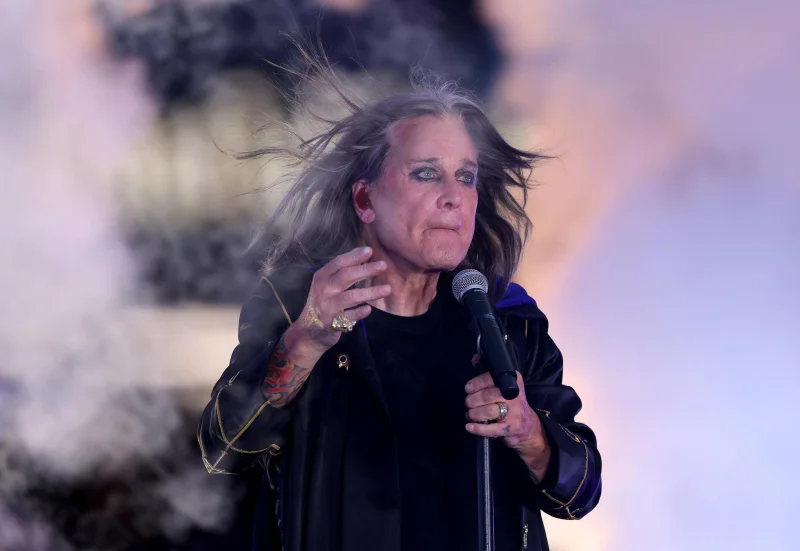
Jack Osbourne and Sharon Osbourne have unveiled plans for an AI-powered hologram of Ozzy Osbourne, with the project expected to let fans talk to a digital version of the late rocker in his own voice. The announcement came this week at the Licensing Expo in Las Vegas during a discussion about the future of the Osbourne brand.
Sharon Osbourne said fans will be able to ask Ozzy anything and hear answers that would have sounded like him. “You can ask Ozzy anything, and he will answer you in his own voice — and the answers will be what Ozzy would have said,” she said. She added, “We’re going to take it all around the world. People can talk to him and he will talk back.”
Jack Osbourne said the project is meant to keep his father present in digital form for years to come. “He will exist digitally as himself for as long as we have computers,” he said. He also described the technology behind the project as increasingly easy to use, saying it has become “almost drag and drop” and that a commercial could be shot around a template before Digital Ozzy is prompted to do exactly what the production needs.
Ozzy Osbourne died last year at 76 after a lengthy career that made him one of the most recognizable figures in heavy metal. The new hologram is expected as soon as late summer and is being built to interact with fans in the US and UK in multiple languages, responding to them individually in real time while appearing to make eye contact.
The project lands as the Osbourne name continues to be used in several ways. Sony Pictures is working on a biopic scheduled for a 2028 theatrical release, and Working Class Hero, an exhibit honoring Ozzy Osbourne’s life at the Birmingham Museum and Art Gallery, runs through the end of September. For readers following the family more broadly, the move comes after recent attention around Kelly Osbourne and a body-shaming response that Jack Osbourne addressed publicly in a separate family matter.
That broader rollout reflects a growing market for photorealistic digital likenesses. Proto Hologram, which is involved in the project, has previously made holograms of Julie Chen Moonves, Elton John, Olivia Rodrigo, William Shatner and Kenan Thompson. David Nussbaum said the hologram is designed to be more responsive than a basic chatbot. “He’s not just a chatbot, he can truly read the room,” Nussbaum said, adding that the system might call out a Black Sabbath tattoo on a fan’s arm, treat executives in suits differently from a crowd of headbangers, or sense distraction and shift the mood.
Hyperreal, which is also part of the effort, said it will use authenticated source material, or digital DNA, to bring Digital Ozzy to life. The company used authenticated source material to resurrect Stan Lee for Los Angeles Comic-Con last year, and a similar approach helped Jewel’s holographic twin greet visitors in 2024 at a visual art exhibit at Crystal Bridges Art Museum in Bentonville, Arkansas. For now, the clearest sign of where this is headed is simple: Ozzy Osbourne’s image, voice and stage presence are being turned into a product that his family says can keep speaking long after the man himself is gone.
