


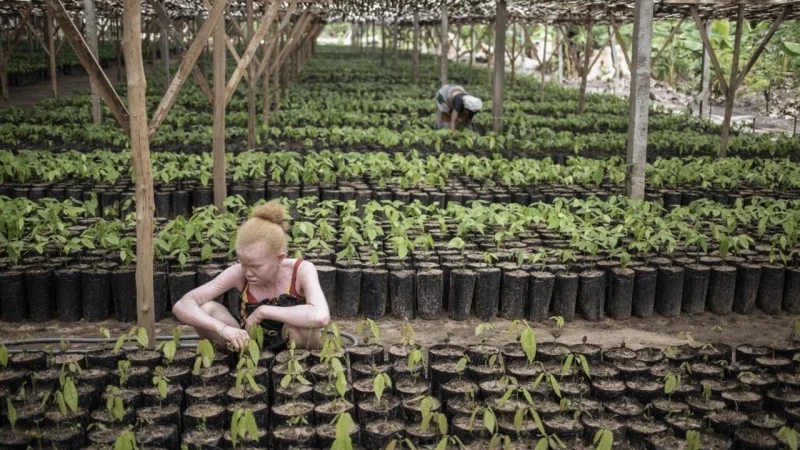
About ten people have been arrested in Madagascar after a series of attacks and crimes targeting people with albinism, authorities said. The arrests come after a baby aged eight months was reported missing in an abduction on Sunday 17 May in the south, and a 12-year-old child was killed the same day in the northwest.
The arrests follow an early April killing of a young person with albinism, underscoring a string of violence that has shaken families across the country. Josvah Maheny said there had been a recrudescence of attacks in the south and west in recent months, adding that the whole community feels threatened and traumatized.
For advocates, the latest detentions are a sign that the violence has reached a level that can no longer be treated as isolated crime. They want the three cases to be tried in Antananarivo, the capital, rather than handled separately in the regions where the attacks took place. The demand reflects concern that local courts may not be able to provide enough distance, security or consistency in cases tied to deep stigma.
Olivia Rajerison said the kidnappings and murders stem from deeply rooted mystical beliefs in some regions, including the idea that body parts of people with albinism can bring wealth, political success, protection or economic prosperity. She said some people also believe the eyes of people with albinism contain diamonds, gold or a magical substance similar to mercury that can locate hidden treasures. “Ces croyances, combinées à l’extrême-pauvreté et à l’ignorance, alimentent un trafic vraiment préoccupant,” she said, adding that the body of a person with albinism is the same as any other, except for a lack of melanin production.
The attacks are unfolding against a legal backdrop that has left protection efforts incomplete. Madagascar’s National Assembly adopted a text last year to protect people with albinism, but the Constitutional High Court blocked its promulgation because of legal inconsistencies. That leaves advocates pressing for immediate criminal cases while the wider safeguards they sought remain stalled.
Maheny also warned that even ordinary encounters can turn into stigma. When a person with albinism is alone in the street, he said, some people tell them not to stay outside and to go home. He said that may sometimes come from concern, but it can also be experienced as discrimination. In Madagascar, where fear and rumor still shape how some families live, the arrests may be only the first test of whether the state can match the scale of the violence with a response that lasts.
