


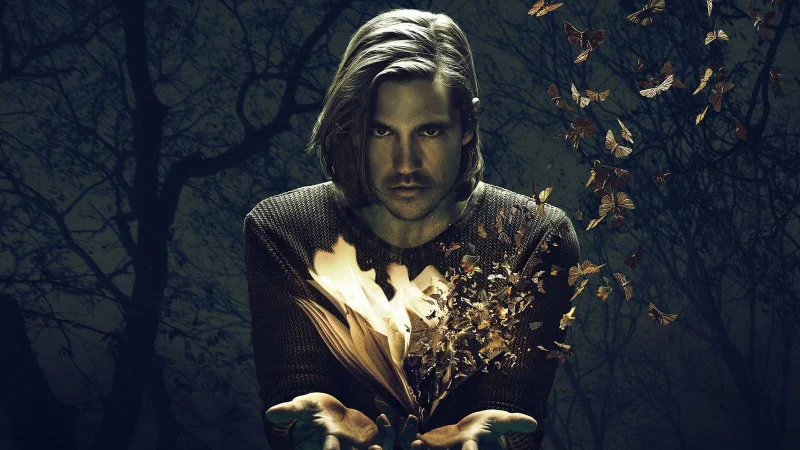
MovieWeb has published a list of 10 high fantasy TV shows with great magic systems, and three titles stand out for the way they make their worlds feel governed by rules instead of rumor. Prime Video's The Wheel of Time, The Witcher and HBO's His Dark Materials all build fantasy around systems that are specific, patterned and deeply tied to character.
The Wheel of Time is the clearest example of that approach. Robert Jordan created a layered and fascinating magic system in which channelers tap into the One Power, which comes from the True Source. Jordan's novels split that power into feminine and masculine halves, Saidar and Saidin, and give channelers five different threads to weave, essentially the four elements plus Spirit. The television version has not gone as deep as the source material, but the series had found its groove in its third season before its untimely cancellation, giving viewers a last look at a world where magic felt structured rather than arbitrary.

The Witcher takes a different path. In that world, magic entered after the Conjunction of the Spheres, and Chaos became the primordial force that a magic wielder must learn to harness. The books draw on the four prime elements of earth, water, fire and air, then add a fifth element, ether, described as the building block of souls and other ethereal beings. On screen, mages and sorcerers are shown with an innate aptitude for tapping into Chaos, while Sources are even more powerful and can use it to its fullest potential. That split gives the fantasy world a hierarchy that is easy to grasp but still leaves room for danger.
His Dark Materials works differently again, but it is just as exacting. Adapted from Philip Pullman's trilogy, the HBO series uses daemons as physical manifestations of a person that exist outside the body and take the form of animals. The bond between people and their daemons is strong enough that severing it becomes a terrifying idea, and the show also folds in technologies linked to interdimensional travel. The result is not magic in the loose, mysterious sense that appears in J.R.R. Tolkien's work, but a universe where every wonder comes with a structure and a cost.
That is why these fantasy television adaptations linger after the credits. They do not just ask viewers to believe in magic; they ask them to learn how it works, and each one rewards that attention with a world that feels older, larger and harder to bend.
