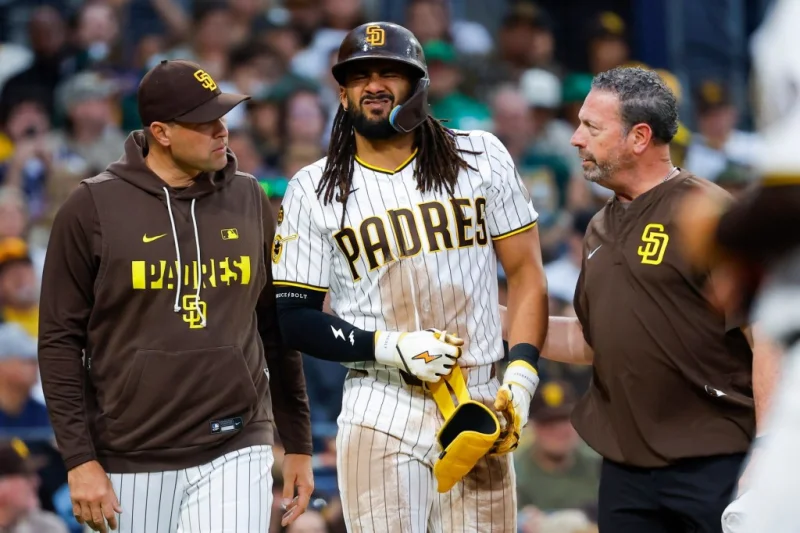
Fernando Tatis Jr.'s lawsuit against Big League Advance Fund was dismissed after a San Diego Superior Court made final on Friday, May 22, a ruling that keeps in place the contract he signed as a teenager in 2017. The court also upheld an arbitrator’s May 2025 decision requiring the Padres star to pay $3.2 million he owed at the time of his lawsuit, plus $240,515 in attorney’s fees.
The ruling closes Tatis Jr.'s attempt to unwind a deal that sent him $2 million up front when he was 18 years old in the Dominican Republic in exchange for 10 percent of his future earnings. By the time he filed suit in June 2025, he had already signed a 14-year, $340 million contract with San Diego in 2021, and he argued that the agreement violated California’s consumer protection laws.
Tatis Jr. said in court filings that he wanted to protect younger players from what he called predatory lenders and illegal financial schemes. In the lawsuit, he said Big League Advance Fund’s chief executive preyed on him when he was a teenager, and described the company’s business as one that “preys on young, financially unsophisticated athletes” by offering lump-sum advances in exchange for a share of future earnings.
He said the arrangement was presented to him as a quick path to money. His lawsuit said Michael Schwimer, the company’s chief executive, took him to dinner with other people associated with Big League Advance and that the discussion focused on fast access to cash. It also said the firm did not explain the legal implications of the agreement or that it was not licensed as a finance lender in California or elsewhere.
The court’s decision leaves that income-share arrangement intact. It also preserves the financial exposure that came with it, including the 10 percent payment tied to his earnings and the arbitration award that grew out of the dispute. For Tatis Jr., the loss means the fight he cast as a warning to other young players has been shut down before it could test those claims in court.
He has continued to frame the case as bigger than his own finances, saying, “I’m fighting this battle not just for myself but for everyone still chasing their dream and hoping to provide a better life for their family,” and, “I want to help protect those young players who don’t yet know how to protect themselves from these predatory lenders and illegal financial schemes — baseball should be about our passion for the game, not dodging shady businesses driven only by profit and greed.” The court, for now, has sided with the contract he signed years ago.