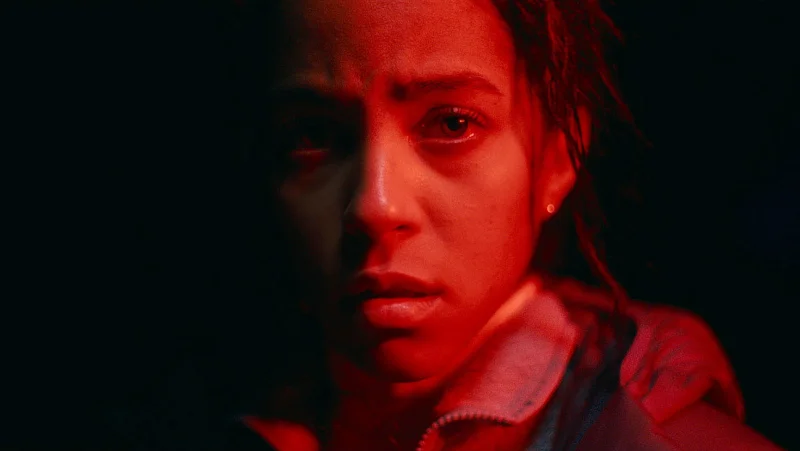
The new horror film Passenger opens with a warning that feels almost practical: never stop on the side of the road to pee. Then it sends a young couple into the dark in a souped-up van, where the rules get harsher and the danger stops looking human.
Melissa Leo plays Diana, a nomadic drifter who tells the couple, “Don’t ever stop” and “Don’t drive at night.” In the review published Tuesday, the film is described as a 94-minute, R-rated road horror that was set for release on Friday, May 22, and leans on the kind of creeping menace that follows a traveler long after the engine cuts out.
The couple begins by trading a Brooklyn apartment for life on the road, a move that should suggest freedom and instead becomes the setup for a chase through something older and uglier. Passenger, directed by André Ovredal and starring Jacob Scipio, Lou Llobell, Leo, Joseph Lopez, Miles Fowler and Alan Trong, sends them toward a malevolent supernatural force, then deepens the unease with the titular demonic figure and the discovery of the Hobo Code.
One of the film’s more memorable detours comes when the couple screens Roman Holiday on an outdoor projector, a detail that should feel romantic but lands inside a horror movie as another sign that they are trying to build a home anywhere the road will let them. The van even carries a Bob Ross bobblehead, and the review says his mantra, “There are no mistakes, only happy accidents,” becomes a running theme. That is the movie’s trick: it keeps borrowing the language of wandering, improvisation and youth, then turns every bit of it into a warning.
Leo’s Diana is the kind of character who can sound like a prophet and a stranger in the same breath. She offers advice that could be read as survival instinct or doom, and the film’s sense of threat grows out of that ambiguity. When she says “People don’t take trips, trips take people,” the line lands less like wisdom than like a verdict on everyone who thinks the open road still belongs to them.
There is a reason the review files Passenger in the same shelf as generic horror chiller rather than anything more ambitious. Ovredal previously made The Autopsy of Jane Doe and Scary Stories to Tell in the Dark, films that had sharper hooks and more defined textures. Here, the road, the van, the projector and the folklore each do some of the work, but the whole feels more suited for late-night cable than for the theater run it was given. The movie has the bones of a nasty little roadside nightmare, yet it never fully escapes the feeling that it is driving in circles.
That is the tension in Passenger: it wants the mythology of a backroads legend, but it keeps arriving as a familiar horror ride. The couple is told not to stop, not to travel after dark, not to trust what waits beyond the headlights, and the film follows through by making the journey itself the trap. By the end, the warning is clear enough. On this road, motion is the only safety, and even that may be a lie.