


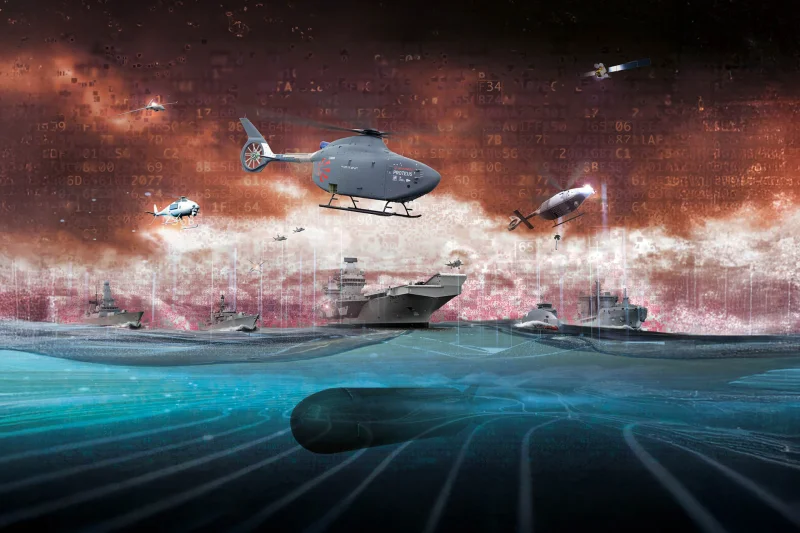
The Royal Navy will be remade as a new hybrid force of crewed, uncrewed and autonomous platforms, General Sir Gwyn Jenkins said in September 2025, with the first uncrewed escort ships expected to sail alongside Royal Navy warships within the next two years.
Jenkins said the service would move to a dispersed but digitally connected fleet that could redefine military power across, above and below the sea. He said the aim was for the first uncrewed escort ships to be operating with Royal Navy warships within two years, a major step in a plan that puts the first seagoing Uncrewed Surface Vessels alongside Type 26 Anti-Submarine Warfare frigates and Type 31 Multi-purpose frigates from 2027 and beyond.
The timing matters because the Royal Navy is under pressure to generate greater mass and effect without relying only on heavily crewed platforms, even as global maritime security becomes more connected and contested. The whole force is described as being available in the 2030s, but the push is already under way to make the fleet more usable in the near term.
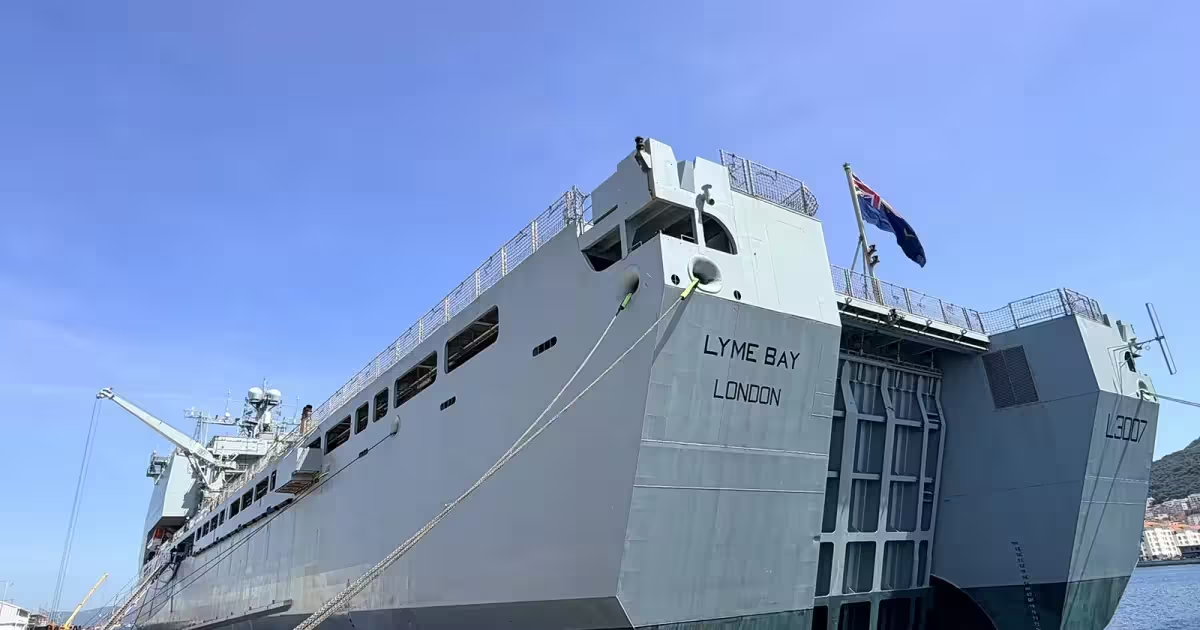
That is where Atlantic Bastion fits. The programme is presented as a practical example of the shift toward a hybrid navy, with highly trained crews working alongside autonomous platforms and artificial intelligence to make Britain more secure from Russian undersea threats in the North Atlantic.
Not everyone is talking about the future in the same way. Leonardo’s Maritime Engagement Lead, Iain Breckenridge, said naval capabilities have to be incrementally deployable, upgradeable and resilient in a contested, congested, denied and degraded electromagnetic environment. He said a crewed platform, initially Type 26 or Type 31 and later a common combat vessel, would fulfil the decide function.
The Royal Navy is trying to do two things at once: improve the fleet it already has so it can operate on a war footing this decade, and build the full hybrid force that commanders say will define the 2030s. The question now is not whether uncrewed escorts will appear, but whether the service can field them quickly enough to matter before the strategic picture changes again.
