


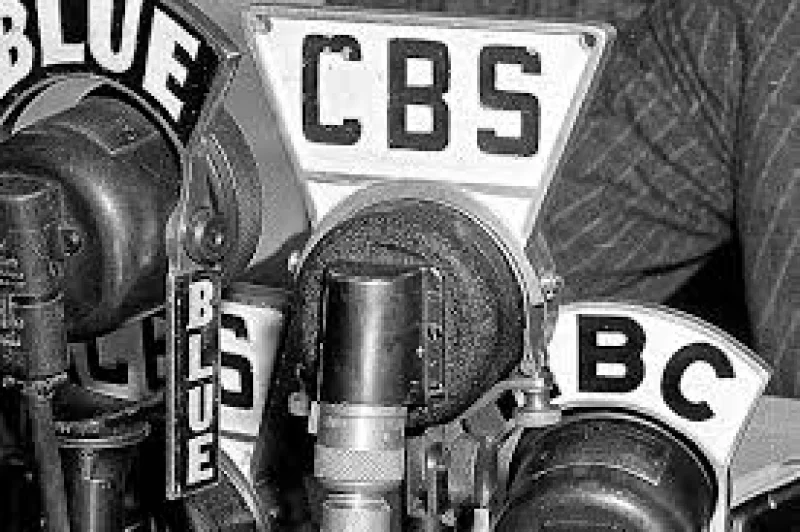
CBS News Radio signed off Friday night after nearly a century on the air, ending a service that helped define network news for generations of listeners. The shutdown closed a run that began in September 1927 and reached an estimated 700 stations across the United States.
The decision to shutter the radio news service was announced in March 2026, when CBS cited challenging economic realities. Even as the signal went silent, company leaders Tom Cibrowski and Bari Weiss said the service had delivered original reporting to the nation for nearly 100 years, and noted that its signature broadcast, World News Roundup, remains the longest-running newscast in the country.
For more than nine decades, CBS News Radio was home to voices that became part of American public life, including Edward R. Murrow, Robert Trout, Douglas Edwards, Charles Osgood and Dan Rather. Murrow’s voice was first heard on air in 1938, the same year the service aired the first broadcast of baseball’s World Series, and a year later it carried an interview with Babe Ruth. The network launched just seven years after what has been widely recognized as the first commercial radio broadcast, placing it near the start of the medium’s national era.
That history was not confined to marquee moments. CBS News Radio covered the attack on Pearl Harbor, the D-Day invasion, Queen Elizabeth II’s coronation, the 1962 Cuban missile crisis, the New York City blackout of 1977, the Gulf War, the 9/11 terrorist attacks and the 2003 Space Shuttle Columbia disaster. Murrow later delivered rooftop reports from London during the Blitz and from the Buchenwald concentration camp after the Germans had fled, defining a style of reporting that prized clarity over flourish.
Dan Rather said CBS Radio should be remembered for becoming a national institution that was important to the development of news beyond newspapers, and he said it was a part, and not a small part, of what held the country together for many years. Steve Kathan put the loss more plainly: “It’s been around for a long time. Really, an American institution is what we’re losing here.”
The final chapter comes as radio news faces pressure from economics that have already reshaped much of the industry. Allison Keyes, who covered the news from Lower Manhattan on 9/11, recalled why the service mattered then in words that fit the end now as well: “People needed to know what was going on that day, in real time, no filter, no politics. Here’s what’s happening.” With the shutdown complete, that voice — and the system built to carry it nationwide — is gone.
