


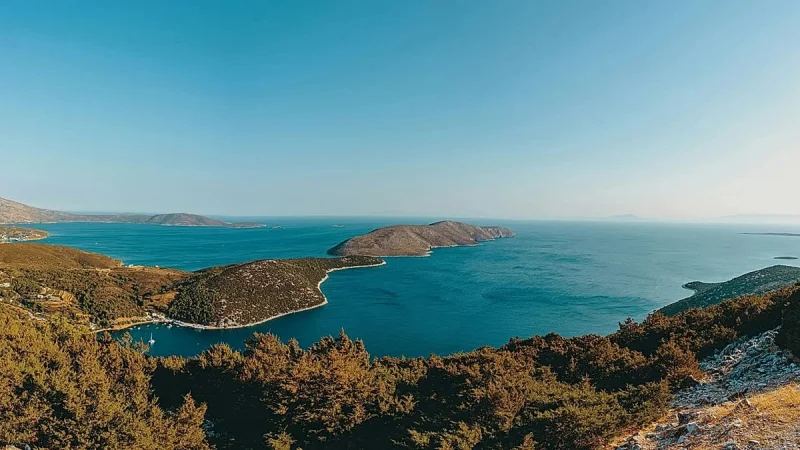
Makri, a private island in the Ionian Sea once talked about as a billionaire’s prize, is heading to auction in November with a starting bid of £213,000. The steep asking price has shocked a property market that long treated the island as a multimillion-euro fantasy.
The island was previously appraised at €8 million, or about £6.9 million, before its value collapsed to a fraction of that figure. For decades, Makri sat in the popular imagination as a luxury hideaway, but the auction now puts a hard number on just how little that dream is worth on paper today.
Makri is part of the Echinades archipelago and sits within the Natura 2000 network, where Greek domestic law classifies its interior as a protected forest reserve. That legal status sharply limits what can be built there. A luxury resort is forbidden. A helipad is forbidden. A multi-villa compound is forbidden. The zoning rules allow only minimal, light infrastructure and severely restricted agricultural use.
The island’s physical shortcomings are just as limiting. It has no municipal water supply network, no electrical grid and no developed harbor capable of safely docking a luxury superyacht during bad weather. The only verified structures on the island are a dilapidated stone house, a solitary water cistern and a small chapel, leaving little to suggest the kind of quick transformation that speculative buyers often imagine.
The gap between reputation and reality is what has driven the collapse. European environmental legislation and Greek domestic protections have made large-scale development impossible, turning what was once marketed in the public mind as a private paradise into a legally constrained plot of land nearly seven kilometers from the myth that once surrounded it.
For the buyer, the appeal will not be in fast development or resort-scale returns. It will be in ownership of a protected island whose uses are tightly defined from the start. For everyone else, the November sale is a reminder that even the most glamorous island names can lose their shine when the law, the terrain and the lack of basic infrastructure are all working in the same direction.
