


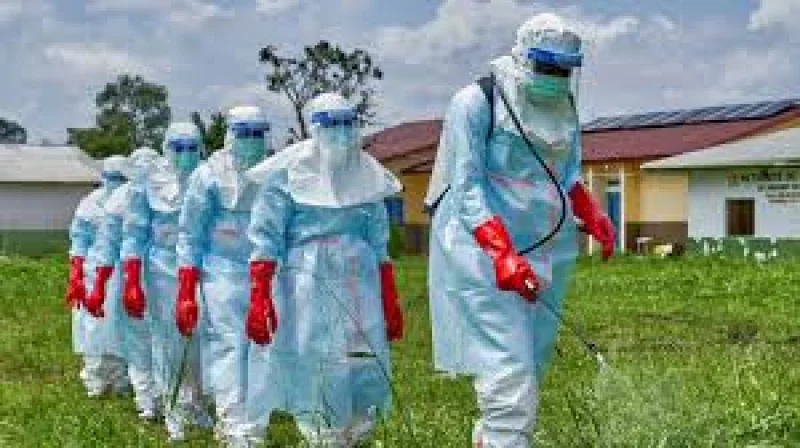
People living near the epicentre of the Ebola outbreak in eastern Democratic Republic of Congo say they are scared, uncertain and trying to improvise basic protection as the disease spreads through a region already battered by conflict.
One man in the north-eastern Ituri province said infected people were dying very fast. Another local resident, Bigboy, said people were “really scared” and trying to do what they could to protect themselves, while Alfred Giza said he would not know what to do if someone close to him caught the disease.
The World Health Organization warned on Tuesday that Ebola cases may be spreading faster than originally thought, after its own investigators found the outbreak had likely reached more areas than first identified. Dr Anne Ancia said the more the agency looked, the clearer it became that transmission had spread beyond the initial zones. A modelling study by the London-based MRC Centre for Global Infectious Disease Analysis went further, saying there had been substantial under-detection and that the current outbreak could already have exceeded 1,000 cases. The study said the true size of the outbreak remains uncertain.
The virus is believed to have killed 136 people in DR Congo and more than 514 cases are suspected, with one death also reported in neighbouring Uganda. The head of the WHO, Tedros Adhanom Ghebreyesus, declared the outbreak an international emergency last week and said he was deeply concerned about the scale and speed of the epidemic. The agency has already released almost $4m to help fight it.
On Tuesday, President Félix Tshisekedi called for calm after holding a crisis meeting on Monday evening, urging citizens to remain vigilant as health workers struggled to track the spread. In Ituri, locals were washing their hands with clean water as a precaution, and Giza said people in his community were waiting to receive face masks to protect themselves. Across the outbreak zone, fear is filling the gaps left by an overstretched response.
That response is unfolding in a region that has lived through years of conflict, where hospitals and clinics have been damaged or destroyed, millions of people have fled their homes and population movements continue as people seek work in local gold mines. More than 11,000 refugees have also crossed from fighting in South Sudan. The Red Cross warned that Ebola could escalate quickly if cases were not identified early, communities lacked information and health systems were overwhelmed, a risk made sharper by the instability around it.
The next test is whether health workers can find cases fast enough before the outbreak pushes further into the gaps between war, displacement and weak medical care.
