


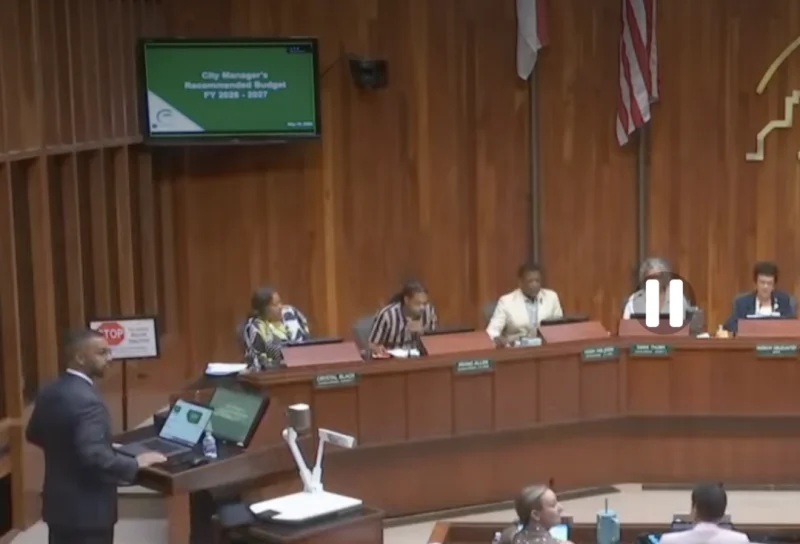
Greensboro City Manager Trey Davis on Tuesday night proposed a $913 million budget for fiscal year 2026–2027 that would lower the city’s property tax rate to 58.30 cents per $100 of assessed valuation. Even with that cut from the current 67.25 cents rate, most Greensboro property owners are still expected to see higher city tax bills because countywide revaluation has pushed assessed values sharply higher.
The proposed rate would be 10.3 cents above what city finance officials describe as a revenue-neutral tax rate of about 48 cents, leaving the plan well short of fully offsetting the effects of the revaluation. The budget calls for $913.2 million in total spending across all city funds, including a General Fund budget of $485.9 million, and represents an increase of $82.7 million, or 9.9 percent, over the current 2025–2026 budget.
The biggest jump is in what the city expects to collect from property owners. Property tax collections alone are projected to rise 21 percent to $329 million in the coming fiscal year, a figure that shows how much higher assessments can more than compensate for a lower rate. The current fiscal year ends June 30, and if the council adopts Davis’s proposal next month, the new budget would take effect for fiscal year 2026–2027.
That is the same pressure facing Guilford County government, where higher property values are also expected to produce substantially more revenue even if elected leaders try to soften the tax-rate impact. In years like this, the rate on paper can fall while the bill in the mailbox still climbs, which is why budget season in Greensboro has turned into a debate over who gets relief from the countywide revaluation and who pays for the city’s growing spending plans.
The tension in Davis’s proposal is plain: the city is asking taxpayers for more revenue while presenting a lower rate as proof of restraint. For many homeowners, especially those whose properties jumped in value this year, the lower rate will not translate into a smaller bill. The council must decide next month whether that tradeoff is acceptable, or whether Greensboro should push closer to the revenue-neutral figure that city finance officials say would be about 48 cents.
For residents watching their notices arrive, the answer is already starting to take shape. The rate is down, but the bill is likely up.
