


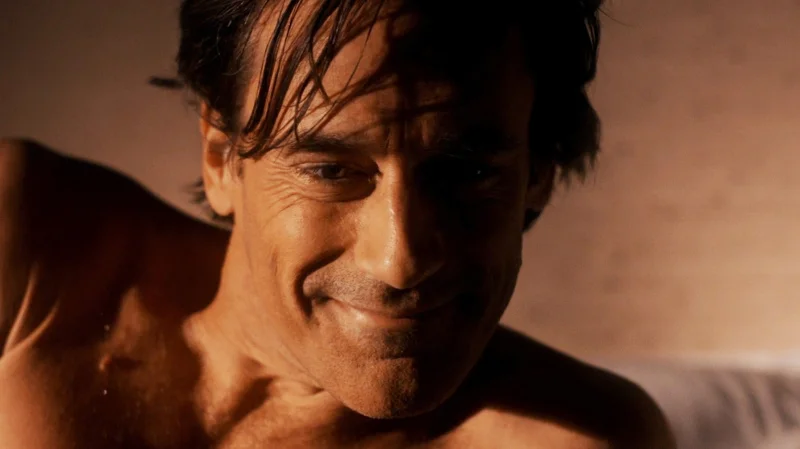
Jon Hamm played a dead man who could still speak, listen and remember in Marjorie Prime, a 2017 film that now looks less like speculative drama than a preview of the argument around artificial intelligence and the dead. In the movie, Hamm appears as Walter, a holographic recreation of an older woman’s late husband, and the story asks what happens when memory itself can be copied and revised.
Marjorie Prime, based on Jordan Harrison’s 2014 play of the same name, centers on Marjorie, an 85-year-old played by Lois Smith who is beginning to show Alzheimer’s symptoms. Her daughter Tess, played by Geena Davis, and son-in-law Jon, played by Tim Robbins, bring her the Prime service, which creates holographic versions of deceased family members loaded with the memories patients choose to keep alive. Marjorie selects a version of Walter, and the synthetic husband initially helps her by telling stories from their life together.
That is the premise, and it is also the trap. The Walter who returns is not a simple comfort machine. As he learns more about the family’s history, painful and shocking memories come to light, and the film moves from soft consolation into something far more unsettling. The result is a family drama about grief, but also about who gets to control the past when the dead can be rendered into something that talks back.
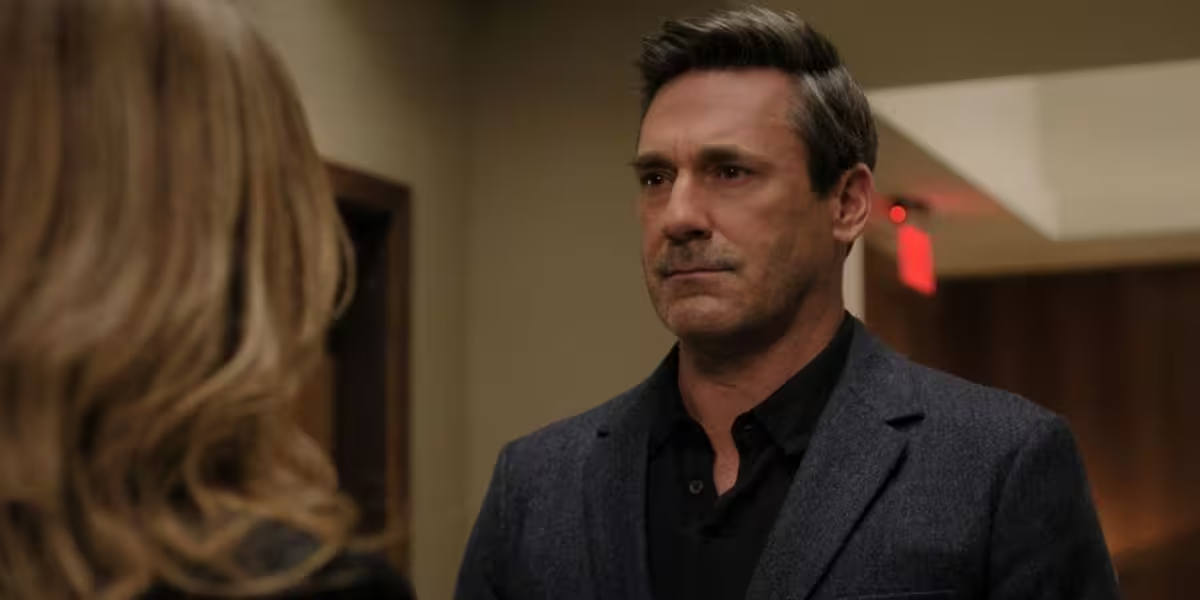
The connection to today is hard to miss. The film shares much in common with the 2013 Black Mirror episode Be Right Back, which followed a woman who ordered a synthetic recreation of her late husband, and the larger idea no longer feels remote. The article frames the issue plainly: recreating deceased loved ones does not seem so far off in the real world, especially as generative AI has already been used to recreate Val Kilmer for the 2026 movie As Deep as the Grave.
That is what gives Marjorie Prime a second life now. It was overlooked when it was released in 2017, but its central premise has moved from science fiction toward a live cultural and ethical dispute. What once played as a haunted thought experiment now sits beside a real industry increasingly willing to rebuild the dead for the screen, and that shift makes Hamm’s Walter feel less like a character than a forecast.
The unfinished question is not whether the technology can imitate someone well enough to fool an audience. It already can, at least sometimes. The sharper issue is what gets lost when memory, grief and performance are collapsed into the same digital object — and whether the people left behind will be able to tell the difference once the dead start speaking in a voice they recognize.
