


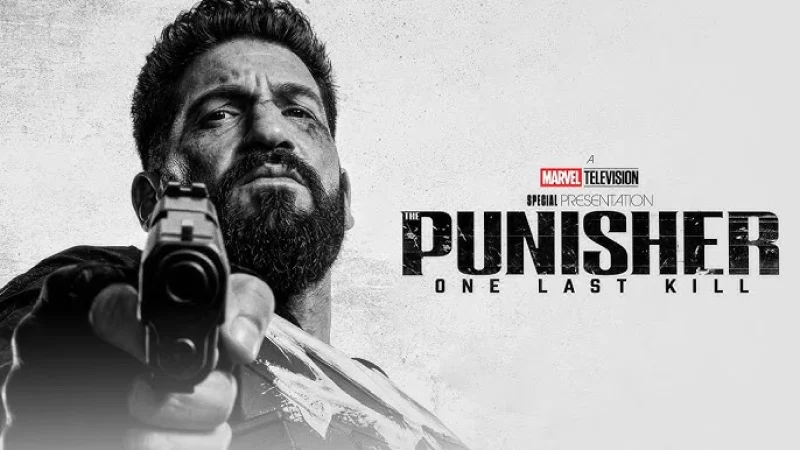
Marvel’s The Punisher: One Last Kill has put Jon Bernthal’s Frank Castle back at the center of the studio’s street-level universe, while renewing debate over how far the Marvel Cinematic Universe should go with one of its most violent and morally charged characters.
The TV-MA special, now streaming on Disney+, runs about 50 minutes and follows Castle as he tries to move beyond revenge before being dragged back into a brutal fight. Its release has become more than another character comeback: it is a test of Marvel’s appetite for darker, adult-oriented storytelling at a time when the studio is rebuilding several corners of its franchise.
Frank Castle Returns In A Darker Marvel Special
The Punisher: One Last Kill brings Bernthal back to the role he first made his own during the earlier Daredevil era. The special centers on a familiar conflict for Castle: the pull between a life no longer defined by vengeance and a world that keeps pushing him toward violence.
The project is framed as a Marvel Television Special Presentation rather than a full series, giving it a leaner structure than Bernthal’s previous standalone run. Reinaldo Marcus Green directed the special, and Bernthal co-wrote it with Green, giving the actor a formal creative role in shaping Castle’s return.
That creative involvement matters. Bernthal has repeatedly treated the Punisher as a character who requires emotional weight, not just gunfire and revenge imagery. The new special leans into that approach, focusing heavily on trauma, isolation and the psychological cost of Castle’s war before the action fully escalates.
Why One Last Kill Has Divided Viewers
The special has drawn attention for its intensity, but also for its compact runtime. At roughly the length of a long television episode, One Last Kill attempts to reintroduce Castle, explore his mental state, connect him to Marvel’s wider street-level story and deliver the violence audiences expect from the character.
That compression has become the main criticism. Some viewers and industry voices have argued that the story needed more room, especially because Castle’s trauma and moral collapse are difficult subjects to handle quickly. Others have praised the special for avoiding the padded feel of some franchise television and delivering a concentrated, grim character study.
The debate reflects a broader challenge for Marvel. The Punisher does not fit easily into the studio’s usual superhero rhythm. His stories are grounded in grief, vigilantism, criminal violence and moral ambiguity. A shorter special can sharpen that tone, but it can also leave emotional and narrative threads feeling underdeveloped.
Bernthal’s Creative Control Signals A Bigger Shift
Bernthal’s role behind the scenes may be the most important development for the character’s future. He has made clear that he is open to playing Frank Castle again, but only under creative conditions that protect the version of the character he believes audiences deserve.

That stance is significant because Marvel is increasingly leaning on familiar performers to stabilize major roles. Bernthal’s Punisher has remained popular because his portrayal carries a lived-in severity that distinguishes Castle from more polished MCU heroes. Giving him writing and producing influence suggests Marvel recognizes that the character’s credibility depends on tone, restraint and authenticity.
It also puts boundaries around future appearances. Castle may return in larger MCU projects, but Bernthal’s comments suggest he is unlikely to treat the role as a simple cameo machine. For fans, that makes the next step less predictable but potentially more meaningful.
How The Special Connects To Daredevil And Spider-Man
One Last Kill sits inside Marvel’s expanding street-level storyline, following Castle’s reemergence in Daredevil: Born Again and ahead of his expected appearance in Spider-Man: Brand New Day, which is scheduled for release on July 31, 2026.
That placement makes the special a bridge. It helps explain where Castle is emotionally and physically before Marvel uses him in a broader theatrical setting. It also allows the studio to keep the character’s harsher material in a TV-MA space while still positioning him for interactions with more mainstream heroes.
The risk is tonal whiplash. The Punisher’s world is built around lethal force and moral consequence, while Spider-Man’s stories traditionally depend on restraint, responsibility and a younger audience. If Marvel uses Castle carefully, the contrast could be powerful. If handled too lightly, it could weaken both characters.
A Test For Marvel’s Adult-Rated Future
The special arrives as Marvel continues experimenting with mature-rated storytelling after years of aiming most of its interconnected franchise at broad family audiences. Daredevil: Born Again reopened the door for bloodier, more grounded Marvel television, and The Punisher: One Last Kill pushes that strategy further.
The TV-MA rating gives the special permission to treat Castle’s world with violence and severity, but the real test is whether that rating serves the story rather than functioning as a branding hook. The strongest Punisher material has usually been less about body count than consequence: what violence does to victims, perpetrators and the person who keeps choosing it.
That is where the new special appears most invested. Its focus on Castle’s trauma, the ghosts of his past and his inability to fully escape revenge suggests Marvel is trying to position the character as more than an action figure in tactical gear.
What Comes Next For The Punisher
Marvel has not laid out a full new Punisher series, and Bernthal’s future remains tied to how much creative trust the studio is willing to offer. His return in Spider-Man: Brand New Day will likely be the next major signal of whether Castle remains a supporting force in other heroes’ stories or moves back toward a larger standalone role.
For now, The Punisher: One Last Kill gives Marvel a sharper, harsher Frank Castle at a moment when the MCU is trying to vary its tone. The special does not settle every question about the character’s future, but it makes one point clear: Bernthal’s Punisher is back, and Marvel’s next move will determine whether this was a one-off revival or the beginning of a more deliberate adult corner of the franchise.
