


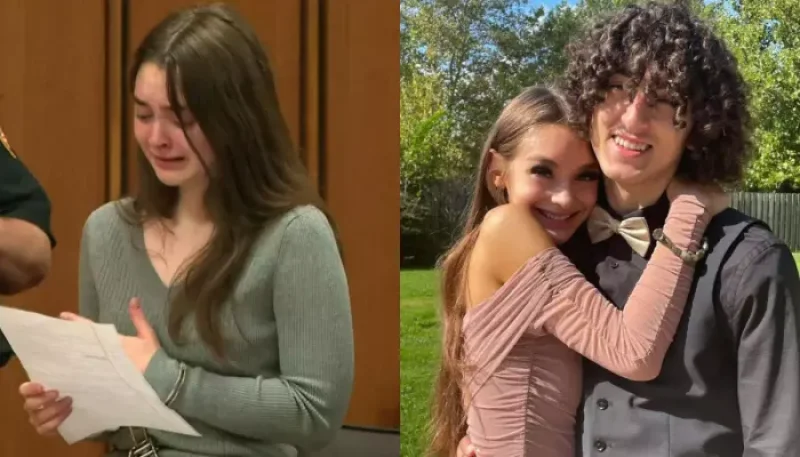
The new Mackenzie Shirilla documentary has pushed a closed Ohio murder case back into national attention, revisiting the 2022 Strongsville crash that killed Dominic Russo and Davion Flanagan and led to Shirilla’s conviction for intentional murder. The film, titled The Crash, premiered May 15, 2026, and has quickly renewed debate over the evidence, the victims’ families’ grief and Shirilla’s continued claim that the wreck was not deliberate.
The Crash Brings A Deadly Ohio Case Back Into Focus
The documentary centers on the July 31, 2022, crash in Strongsville, Ohio, when Shirilla, then 17, drove a vehicle into a brick building at nearly 100 mph. Russo, 20, and Flanagan, 19, were passengers in the car and died from their injuries. Shirilla survived.
What initially appeared to be a catastrophic teen driving crash became a murder investigation after police and prosecutors focused on the speed of the vehicle, its path before impact and the relationship dynamics involving Shirilla and Russo. At trial, prosecutors argued the crash was intentional and that Shirilla used the car as a weapon.
A Cuyahoga County judge convicted Shirilla in 2023 on multiple charges, including murder and aggravated vehicular homicide. She received two concurrent life sentences with eligibility for parole after 15 years. Her first parole opportunity is expected in 2037.
What The Mackenzie Shirilla Documentary Shows
The Crash includes prison interview material with Shirilla and revisits the investigation, trial evidence and emotional fallout for the families of the two young men who died. The documentary also examines the volatile relationship between Shirilla and Russo, a central issue in the prosecution’s theory of intent.
Shirilla and members of her family have continued to deny that she meant to kill anyone. Their position is that the crash may have resulted from a medical episode or another noncriminal explanation. The court rejected that argument, and the conviction remains in place.
The renewed attention has been intense because the case sits at the intersection of true crime, teenage relationships, digital-age public scrutiny and a rare murder conviction tied to a vehicle crash. The film’s framing has also drawn debate over how documentaries present defendants, victims and grieving families when a criminal case is legally resolved but still contested in public.
Jail Calls And Former Inmate Claims Add New Attention
Public interest grew further this week after recorded jail calls and comments from a former inmate circulated after the documentary’s release. In one call, Shirilla discussed fears about her future after prison, including whether she would be able to have a family. In another, she questioned whether she needed rehabilitation.
A former fellow inmate also challenged the somber image viewers see in parts of the film, claiming Shirilla appeared upbeat and image-conscious during incarceration. Those comments have intensified online criticism, though they do not alter the legal record of the case.

The renewed discussion reflects one of the broader tensions around true-crime documentaries: audiences often treat new interviews, tone and demeanor as fresh evidence, while courts rely on trial records, forensic findings and testimony. In Shirilla’s case, the legal outcome has not changed, even as public interpretation continues to evolve.
Why The Strongsville Crash Was Treated As Murder
The prosecution’s case rested heavily on intent. Investigators examined the vehicle’s speed, the route, surveillance evidence and the absence of signs that Shirilla tried to slow down before impact. The state argued that the crash was not a loss of control but a deliberate act after a troubled relationship.
That distinction made the case unusually severe. Fatal crashes often lead to charges such as vehicular homicide, impaired driving offenses or reckless operation. Murder charges require proof that the defendant acted with the required level of intent under criminal law.
The judge’s verdict signaled that the evidence met that burden. Shirilla was tried as an adult, a decision that dramatically raised the stakes and exposed her to a life sentence despite being a minor at the time of the crash.
Documentary Fallout Reaches Shirilla’s Family
The documentary has also affected Shirilla’s family outside the courtroom. Her father, Steve Shirilla, was placed on administrative leave from his teaching position at a Cleveland-area school after appearing in the film. He has said he believes the decision was connected to his comments in the documentary and has objected to how his remarks were edited.
That development has added another layer to the story, showing how high-profile true-crime projects can create consequences beyond the defendant and victims’ families. Schools, employers and communities often face pressure when a case reenters public debate, particularly when the facts involve young people and violent death.
What Happens Next In The Mackenzie Shirilla Case
There is no immediate indication that the documentary changes Shirilla’s sentence or conviction. She remains incarcerated at the Ohio Reformatory for Women and is serving concurrent life sentences with parole eligibility after 15 years.
The next formal legal milestone is years away unless new court filings emerge. For now, the most immediate impact of The Crash is public rather than judicial: renewed attention on the deaths of Russo and Flanagan, renewed scrutiny of Shirilla’s explanation and renewed debate over how true-crime storytelling shapes the memory of real cases.
The case remains defined by the court’s finding that the crash was intentional, while Shirilla and her family continue to dispute that conclusion. As the documentary reaches a wider audience, the legal facts are settled for now, but the public conversation around the Strongsville crash is far from over.
