


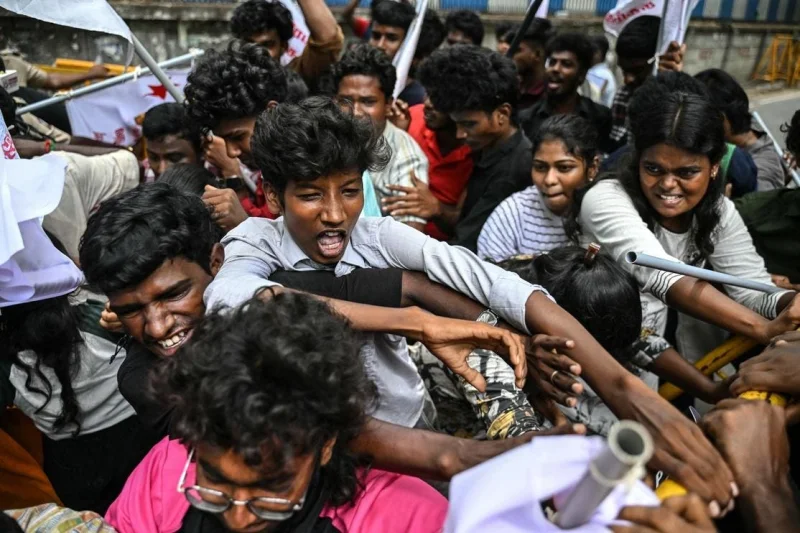
The Cockroach Janta Party emerged late last week as a furious, fast-moving protest against India’s political class after Chief Justice of India Surya Kant described young, unemployed Indians as being like cockroaches. Built by 30-year-old Abhijeet Dipke, the movement has drawn nearly 5 million followers on social media and says it now has more than 160,000 members.
What began as a backlash to Kant’s remark quickly became something larger. The group launched a website and a manifesto, calling itself the “Voice of the Lazy & Unemployed,” and began targeting Prime Minister Narendra Modi and his ruling Bharatiya Janata Party. On the site, the movement says all media houses owned by Ambani and Adani should have their licenses canceled to make way for truly independent media, while the bank accounts of Modi-friendly news anchors should be investigated.
Kant later distanced himself from the comments after the backlash, but the damage had already been done. His original line — that unemployed young people were “like cockroaches” who “become media…social media” and “start attacking everyone” — spread quickly online, giving Dipke’s group a slogan, a grievance and a ready-made audience at the same time.

The rise of the Cockroach Janta Party lands in the middle of a wider affordability squeeze and a punishing jobs picture. India’s rupee has slipped to nearly Rs 97 against the U.S. dollar from 85 a year ago, and the 2026 State of Working India Report says graduate unemployment stands at nearly 40 percent for people aged 15 to 25 and 20 percent for those aged 25 to 29. The country produces 8 million graduates a year, and many are finding that a degree no longer guarantees a foothold in the labor market.
The manifesto goes further than jobs and media. It also criticizes federal judges receiving post-retirement roles and recent voter roll purging by the federal election commission, broadening the group’s attack on what it portrays as a closed and self-protecting establishment. It has also been tangled in the same political arguments that surround Modi’s government, even as neither the prime minister nor senior BJP leaders have publicly commented so far.
For now, the movement is less a conventional party than a barometer of rage. It has turned one insult into a rallying cry, and in doing so has exposed how quickly frustration among young Indians can harden into politics when jobs are scarce, prices bite and institutions sound out of touch.
