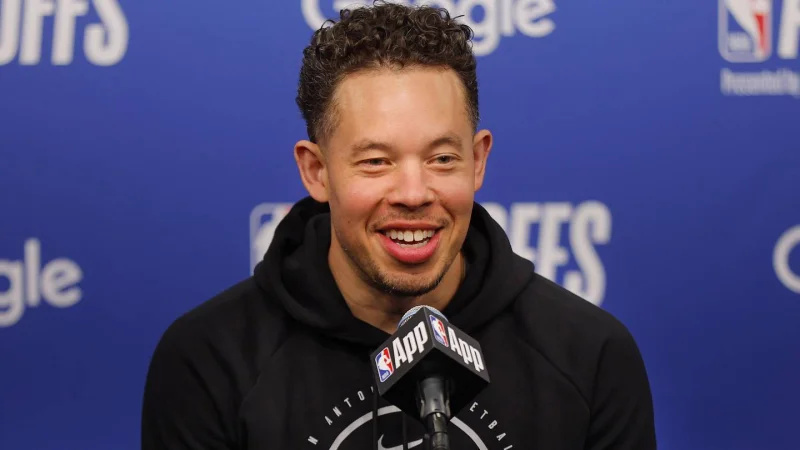
Mitch Johnson narrowed his rotation to open the second half of Game 6 against the Timberwolves, and the Spurs looked like a team willing to trust its best five when the pressure rose. In the third quarter, Johnson went even shorter, leaning on starters and only Harper, Bryant and Kornet off the bench.
That change mattered because San Antonio’s defense had wavered and handed Minnesota life. Johnson responded by sticking with the best defenders he had to try to smother the Timberwolves’ momentum, and the result was a 36-23 third quarter that made the game feel all but finished.
Paul Garcia noted after the game that Johnson had gone to a shorter rotation in the third quarter, saying it was the first time he had seen that in the playoffs. Harrison Barnes had already seen his minutes cut, and Keldon Johnson was the missing name from a group that still represented a nine-man rotation before he was left out. That sequence matters because it shows Johnson was not afraid to change course in real time, even with the postseason on the line.
The Timberwolves game now reads like a possible template for what San Antonio may need in a matchup with Oklahoma City. The Spurs are being framed as needing that same command from Mitch in the Western Conference Finals, where the thinking is that the clash will come down to San Antonio’s offense against Oklahoma City’s defense. The view from inside the matchup is that the Thunder do not have the requisite weapons to slow down the Spurs’ offense, and that Stephon Castle, De'Aaron Fox and Dylan Harper should not be fazed by Alex Caruso’s and Lu Dort’s physicality.
That leaves Johnson with the kind of choice coaches live for and dread in equal measure: whether to keep the rotation tight enough to protect a lead, or risk spreading minutes wider and losing the edge that flipped Game 6. If the Spurs want the same control against OKC, the answer may already be in the third quarter against Minnesota.