


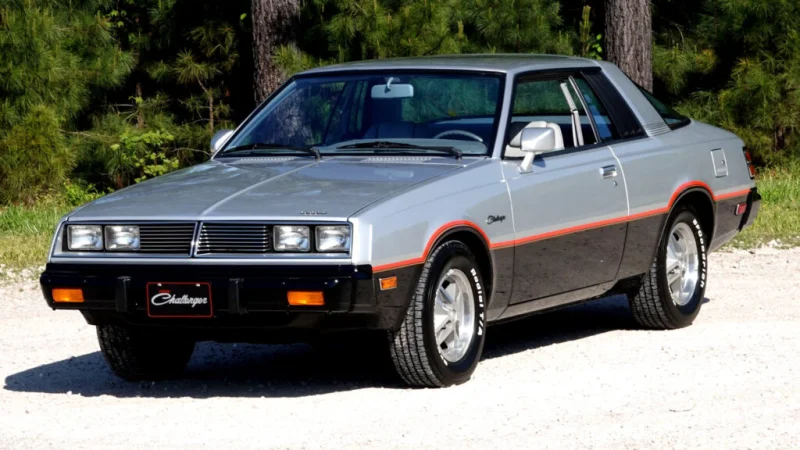
Dodge revived the Challenger name in 1978, but the car that wore it in the late 1970s and early 1980s had little in common with the original muscle machine. A 1980 Dodge Challenger now at Raleigh Classic Car Auctions in Zebulon, North Carolina has logged just 37,309 miles, or 60,043 km, and is believed to have had only two owners.
The car sits on its original 14-inch wheels and is powered by a 2.6-liter naturally aspirated four-cylinder engine rated at 105 horsepower when new. For a time, Dodge also offered a smaller 1.6-liter version with 77 horsepower. The model was based on the Mitsubishi Galant, sold as the Sapporo in some foreign markets, and was first known as the Dodge Colt Challenger before the name was simplified.
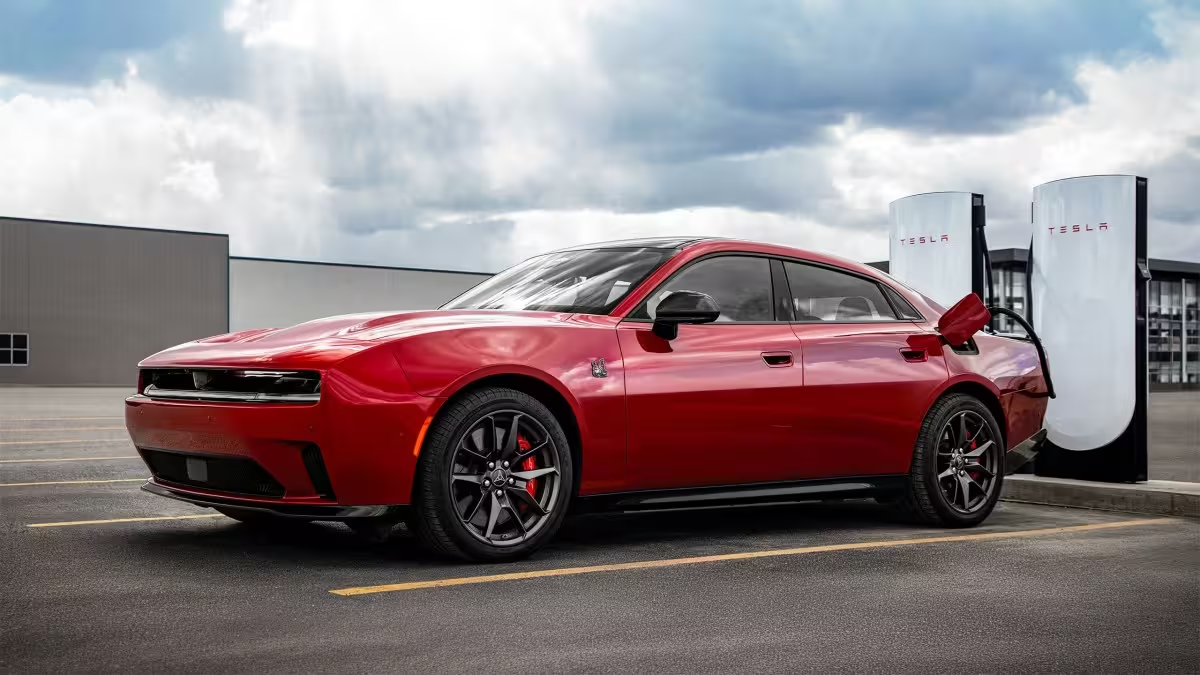
That history matters because the second-generation Challenger, built from 1978 to 1983, reflected the oil-crisis era and tightening regulations that reshaped the American car market. It was a rebadged Mitsubishi-based coupe, not the brute-force performance car many people associate with the Challenger badge. That makes the 1980 example more of a time capsule than a muscle car, and in 2026 it is the sort of survivor collectors notice because so many cars from that period were used up, modified, or simply disappeared.
The contrast is stark when the model is placed between the original Challenger and the third-generation car that remained in production until 2023. The first generation carried the badge into the muscle era; the later one brought it back as a modern performance car. The second-generation model sits awkwardly between them, remembered less for speed than for the compromises of its time. Even so, a low-mileage, two-owner survivor on its original wheels gives that forgotten chapter a kind of value that no brochure specification can fully explain.
For Dodge, the name has been used to mean very different things over the decades, and this Challenger is a reminder of one of the least celebrated versions. The auction car does not answer what the badge should have been in 1980; it answers it plainly by surviving long enough to show how the market, the fuel crunch and regulation bent the brand in a different direction.
