


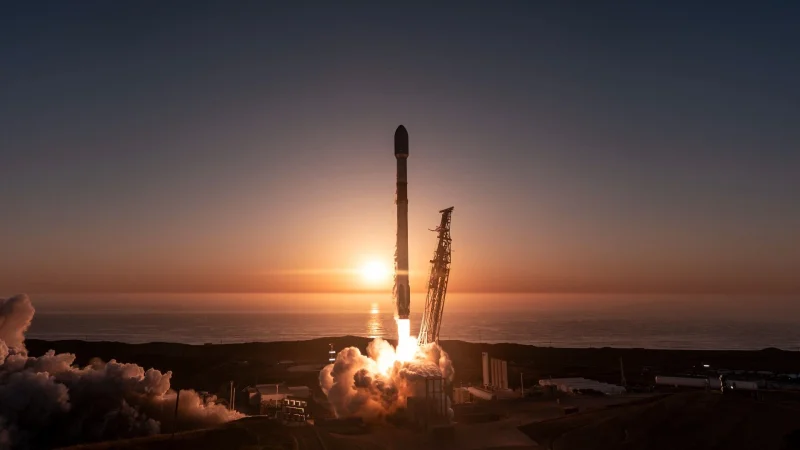
SpaceX launched 24 more Starlink satellites into orbit late Tuesday, May 19, after a Falcon 9 rocket lifted off from California and sent the internet relay craft toward a preliminary orbit on a mission that further expanded the company’s low-Earth-orbit network. The launch came at 10:46 p.m. EDT, or 7:46 p.m. PDT, from Space Launch Complex 4 East at Vandenberg Space Force Base in southern California.
The satellites, designated Group 17-42, reached a preliminary orbit about 8 minutes and 40 seconds after liftoff and were on track to be deployed about 50 minutes after launch. Falcon 9 booster 1103 completed its first reuse on the flight, which was its second mission, and later landed on the Pacific Ocean-based droneship Of Course I Still Love You.

The mission pushed SpaceX’s Starlink network to just under 10,500 working units, a scale that keeps the company’s satellite internet system growing at a rapid clip. Tuesday’s launch was SpaceX’s 58th mission of the year and its 651st successful launch since 2010, another marker of how routine the company’s high-cadence launch pace has become even as each flight adds to a constellation that already fills a big share of low Earth orbit.
The reuse of booster 1103 also fits the pattern that has made Falcon 9 the workhorse of SpaceX’s launch business. The hardware flew for a second time and returned to the sea-based landing platform after delivering the payload on schedule, a sequence the company has repeated often enough that it now sits at the center of nearly every major Starlink deployment.
What Tuesday’s flight shows is not just another cargo run to orbit but the scale SpaceX has reached in building and replenishing Starlink. With the network now at just under 10,500 working units after the mission, the next question is not whether the company can keep launching, but how long it can keep adding satellites at this pace without slowing the cadence that has defined the program.
