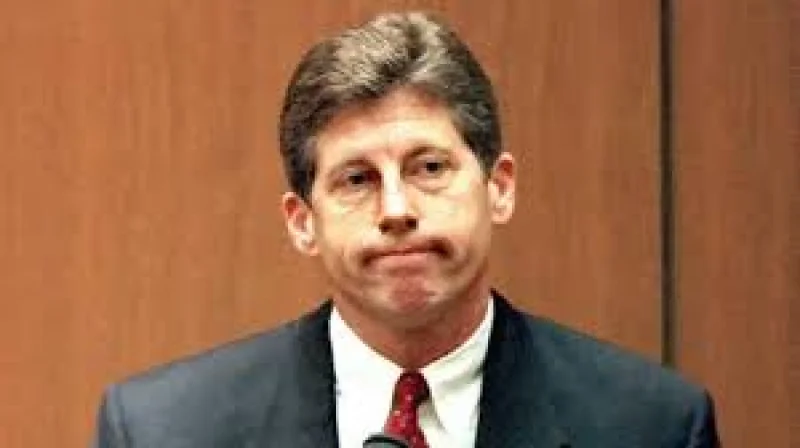
Mark Fuhrman, the Los Angeles police detective whose testimony helped define the O.J. Simpson murder trial, died May 12 in Kootenai County, Idaho, at 74. The Kootenai County coroner’s office confirmed the death, and Lynda Bensky said throat cancer was the cause.
Fuhrman was one of the most recognizable figures in the 1995 trial, where defense lawyers seized on his past use of racist language and turned him from a prosecution witness into the center of the defense’s attack. After a California jury found Simpson not guilty, Fuhrman later pleaded no contest to perjury charges and was placed on probation, closing one chapter but not the public’s fixation on what he had said and done on the stand.
That fixation grew out of the killings that brought him to the case. Nicole Brown Simpson and Ronald L. Goldman were stabbed to death on June 12, 1994, on a walkway leading to her condominium in Brentwood, Los Angeles. Nicole Brown Simpson was nearly decapitated. Police investigators believed Simpson was the killer from the start, and a bloody glove was found at the scene, but the knife used in the attacks was never found.
Fuhrman had a direct link to Nicole Brown Simpson long before the trial began. He had responded more than once to calls for help from her, and she had said she had been beaten by her husband and feared for her life. By the time the case reached court in 1995, Fuhrman had become a key prosecution witness, only for the defense to play audiotapes of him using a racial epithet dozens of times.
He first denied ever saying the word, then later acknowledged that he had used such language. Fuhrman said he had used it in the context of creating a screenplay he hoped would become a movie. One trial witness recalled Fuhrman saying that if it were up to him, Black people would be gathered together and burned. On the tapes, he was also heard saying that there were police officers who would just love to take certain people and just take them to the alley and just blow their brains out.
The damage spread beyond the courtroom. In a second turn on the witness stand, Fuhrman invoked his Fifth Amendment right against self-incrimination. Johnnie Cochran then branded him “a lying, perjuring, genocidal racist,” and Fred Goldman said, “This is now the Fuhrman trial.”
Even so, the picture was not as simple as the prosecution’s collapse suggested. Some of Fuhrman’s Black and Latino police colleagues defended him, saying they found him arrogant but did not believe he was racist, and few complaints were brought against him during his years on the force from 1975 to 1995. The defense also argued that police had planted the bloody glove at the murder scene, though it offered nothing to support that allegation.
Fuhrman’s death closes the life of a detective who became a symbol of the Simpson case’s ugliest questions and then spent years answering them in public. He later worked as a television commentator and wrote books about the Simpson case and other famous murders, but the name that followed him to the end was the one the trial made impossible to escape.