


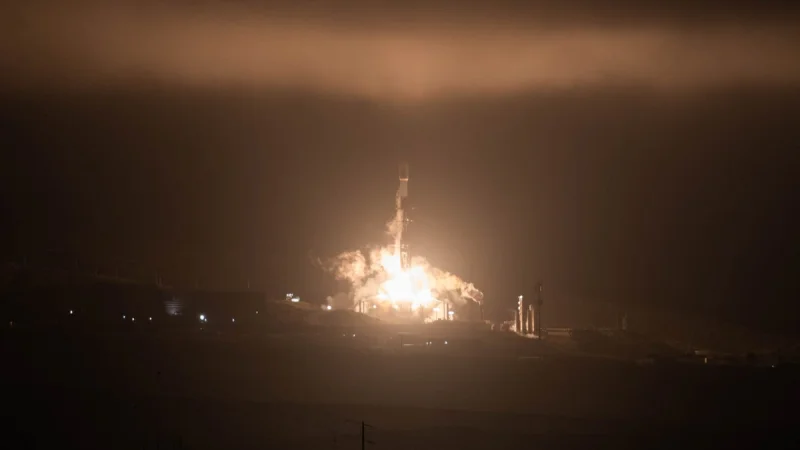
SpaceX is aiming to send a Falcon 9 rocket into the sky from Southern California on Tuesday, May 19, carrying 24 Starlink satellites into low-Earth orbit. The launch window opens at 7:11 p.m. PT at Vandenberg Space Force Base in Santa Barbara County, and a Federal Aviation Administration operations plan advisory indicates a backup opportunity is available the next day if the flight is delayed.
The mission would be the first of two SpaceX launches planned for the week ahead from Vandenberg, a busy stretch for a company that has made routine rocket work part of its business model. The Falcon 9 is a two-stage, 230-foot rocket, and SpaceX says the launch will be streamed on its website and through the X TV mobile app, with the webcast beginning about five minutes before liftoff. The company may also post updates on X.

The flight is another step in the expansion of Starlink, SpaceX's internet satellite network, which now has more than 10,000 spacecraft in its growing orbital constellation and serves millions of customers around the world. That business has helped turn launch cadence into strategy. SpaceX, founded in 2002 and now based at Starbase in South Texas near the U.S.-Mexico border, is also the launch service provider for government missions ranging from classified Pentagon payloads to NASA crew flights.
That reach is part of what makes the Southern California launch notable today. While the Falcon 9 is far smaller than SpaceX's 400-foot Starship megarocket, which the company is preparing to send from South Texas for the first time in 2026, it remains the workhorse that keeps satellites going up, astronauts headed to the International Space Station on Dragon, and the company’s launch schedule moving. If Tuesday’s attempt slips, the FAA advisory points to the next day as the immediate fallback; if it goes as planned, SpaceX will have added 24 more satellites to a network already measured in the thousands.
