


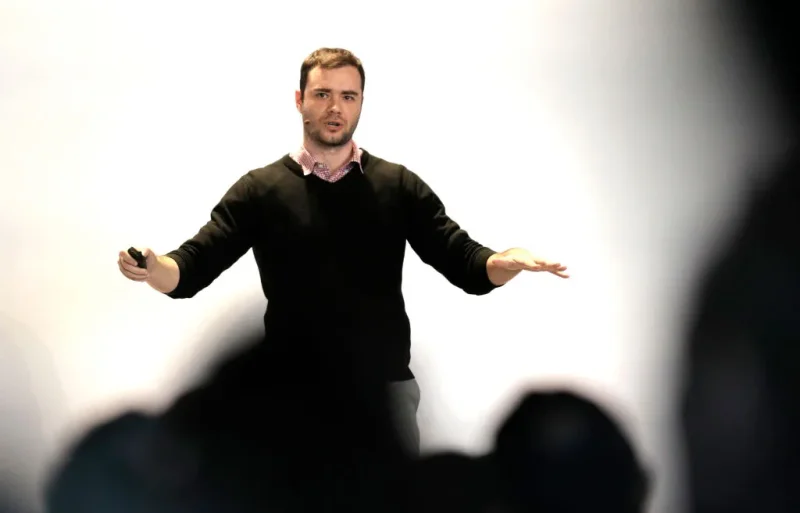
Andrej Karpathy, a founding member of OpenAI and former Tesla AI leader, has joined Anthropic, giving one of the industry’s most closely watched artificial intelligence companies another high-profile researcher as competition over advanced models intensifies.
Karpathy Takes A New Role In Model Training
Karpathy’s move places him back inside a frontier AI lab after a period focused heavily on education, public technical writing and his AI-native learning venture, Eureka Labs. His new work centers on pretraining, the large-scale process used to build the base capabilities of advanced language models before later safety tuning, product adaptation and deployment.
The role is significant because pretraining remains one of the most technically demanding and strategically important parts of AI development. It shapes how systems learn language, coding, reasoning patterns, factual structure and general problem-solving behavior from massive datasets.
Karpathy will work on efforts tied to Claude, Anthropic’s family of AI models, at a moment when leading labs are racing to improve reliability, coding ability, scientific usefulness and agent-like behavior. His arrival gives the company a researcher with unusual experience across academic deep learning, autonomous driving, startup education and major commercial AI systems.
Why The Founder Label Matters
Karpathy is often described as an OpenAI founder or founding member because he was part of the organization’s early research team when it launched in 2015. He later left for Tesla, where he became director of AI and helped lead computer vision work for Autopilot.
That background gives him credibility across two of the most consequential AI arenas of the last decade: large-scale neural networks for language and perception systems for real-world driving. His public reputation also extends beyond corporate roles. Karpathy’s lectures, code walkthroughs and essays have made him one of the field’s most influential explainers for engineers trying to understand how modern AI systems are built.
His return to a major AI lab does not mean Eureka Labs has disappeared from view. Karpathy has framed education as a continuing long-term interest, and the company’s mission remains tied to using AI to make high-quality instruction more accessible. The immediate news, however, is that his professional focus has shifted back toward frontier model research.
Anthropic Gains A Recognizable Technical Voice
For Anthropic, the hire strengthens both technical capacity and public perception. The company was founded by former OpenAI employees and has positioned itself around building capable AI systems with an emphasis on safety, reliability and enterprise use.
Karpathy’s profile fits neatly into that competitive environment. He is not just a senior researcher with name recognition; he has a track record of making complex AI concepts legible to the wider developer community. That can matter in a market where credibility with engineers, researchers and enterprise customers is increasingly valuable.

His joining also underscores a broader talent battle among AI companies. The leading labs are competing not only for chips, data and distribution, but also for people who understand how to train, evaluate and scale increasingly powerful systems. Senior researchers with experience at multiple top-tier AI organizations can influence both internal technical direction and external confidence.
The Move Comes After Eureka Labs
Karpathy launched Eureka Labs in 2024 with the goal of building an AI-native school. The idea was to combine human-designed courses with AI teaching assistants, starting with technical material focused on understanding and building language models.
That project reflected a theme Karpathy has returned to repeatedly: AI will change not only what people build, but how they learn to build. His teaching style, from Stanford’s deep learning course to his online neural network tutorials, has helped shape how many software developers first encountered modern AI.
The Anthropic move does not erase that education agenda. Instead, it suggests Karpathy sees the next phase of model development as important enough to rejoin the core research race. For students, developers and AI watchers, the question is how his work at a frontier lab will influence his public teaching and future educational projects.
What It Means For The AI Race
The hiring lands at a sensitive time for the AI industry. Major labs are pushing toward systems that can write software, operate tools, assist with research and handle longer, more complex tasks. Progress now depends on more than simply scaling models; companies are working to improve reasoning, data quality, post-training methods, safety testing and real-world usability.
Karpathy has recently been associated with ideas such as “vibe coding,” a phrase used to describe a style of software development in which programmers rely heavily on AI systems to generate and reshape code through natural-language prompts. His interest in that shift is relevant because the next generation of models is expected to play a larger role in engineering workflows.
Anthropic’s Claude has already gained traction among developers, especially for coding and writing tasks. Karpathy’s involvement in pretraining research could help sharpen the company’s work on the foundations that make those downstream capabilities stronger.
What To Watch Next
The immediate impact of Karpathy’s arrival will not be visible overnight. Pretraining research moves through long experimental cycles, and frontier model development depends on teams rather than individual star hires. Still, the move is a clear signal that Anthropic is investing in the deepest technical layers of AI development.
For Karpathy, the role marks another turn in a career that has moved from Stanford classrooms to OpenAI, Tesla, education entrepreneurship and now Anthropic. For the industry, it reinforces a familiar pattern: the people who helped define modern AI are still shifting between the companies trying to determine what comes next.
The central question is whether his return to hands-on frontier research will produce visible gains in Claude’s future capabilities. For now, Anthropic has added one of AI’s best-known builders and teachers at a moment when the race to train more useful, reliable and powerful systems is only accelerating.
