


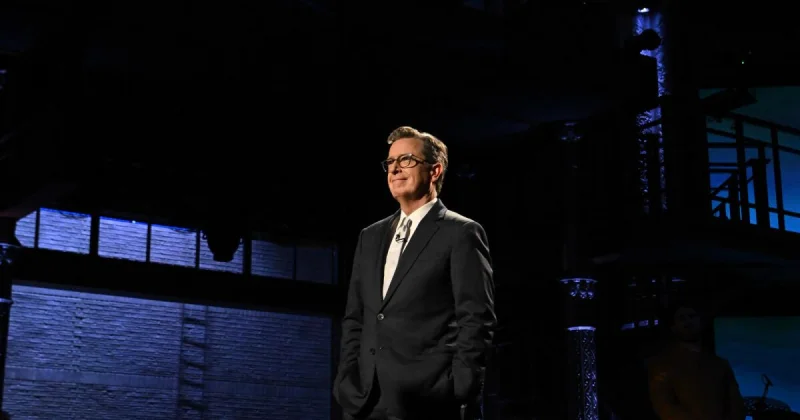
Stephen Colbert’s run on The Late Show is ending Thursday, closing a stretch that began in 2015 and helped define late-night television for a generation. CBS said last July that the show would be ending after more than 30 years on air, and it has maintained that the decision was purely financial.
The final weeks have looked less like a quiet goodbye than a reunion. Former President Barack Obama stopped by. So did the Strike Force Five crew of Jimmy Fallon, Jimmy Kimmel, Seth Meyers and John Oliver, along with Jon Stewart, Sally Field, Julia Louis-Dreyfus and David Letterman. For a host who made his name by turning politics and pop culture into the same conversation, it was a fitting sendoff.
Colbert has been host since 2015, taking over a franchise that had already outlived several television eras and more than 30 years on the air. Its end lands at a moment when broadcast late-night is under pressure from changing viewing habits and a tougher business model, which is why CBS has stuck to its line that this was about finances rather than anything said on the air.

That explanation has left room for suspicion, but the facts do not point to a hidden feud or a sudden public blowup. CBS announced the ending in July of last year, well before the final episode, and the network has not moved off its financial rationale. In that sense, the story is not about a cancellation sprung on the host at the last minute. It is about a long-running institution reaching the point where even a famous name was not enough to keep the numbers working.
Colbert also leaves with another assignment already in hand: he is co-writing the script for the next Lord of the Rings movie. It is a sharp turn, but not an odd one for a performer whose best work has always moved between satire, storytelling and the art of making an audience feel like it was in on the joke.
Among the final-week guests, Andrew Garfield gave one of the clearest reminders of what the show could still do at its best. Garfield appeared during the show’s seventh season to promote Tick, Tick... Boom!, talked about preparing for the role of Jonathan Larson, and spoke with Colbert about grief after the recent death of his mother. Garfield described grief as unexpressed love, a line that fit the softer edge Colbert often found beneath the comedy. Nick Cave, who appeared with the Bad Seeds in 2017 and later returned to discuss Wild God and Faith, Hope, and Carnage, was another example of how the show could still stretch beyond the usual celebrity circuit.
The end of The Late Show is not a mystery anymore. CBS chose the money over the model, Colbert got a final week full of names that mattered, and the show signed off as one more casualty of a business that no longer supports what it once did so easily.
