


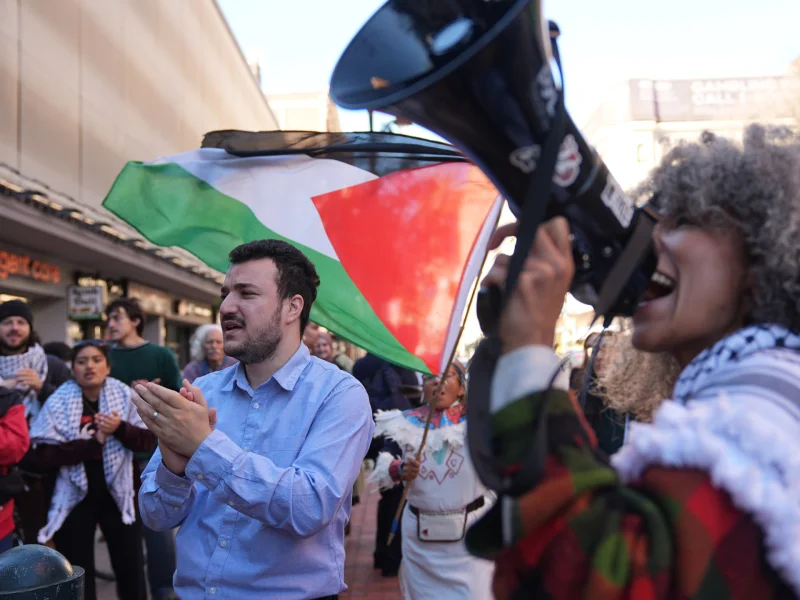
Mahmoud Khalil’s lawyers asked an immigration appeals court on Friday to reopen and terminate the former Columbia University student’s deportation case, saying new evidence suggests the Trump administration secretly engineered the outcome to make an example of him.
The filing landed just over a month after the Board of Immigration Appeals issued a final order of removal for Khalil, who was first detained by immigration enforcement agents in March 2025 and later released from detention in June 2025 after a federal judge ordered his freedom. His lawyers say the latest material shows the case was shaped from the start to deliver a predetermined result rather than a fair hearing.
Khalil, a U.S. permanent resident who is married to a U.S. citizen, has never been charged with a crime. He was among several students targeted over their participation in pro-Palestine campus protests that swept the United States last year, and the Trump administration has framed his deportation effort as part of a crackdown on anti-Semitism. In a separate report, said Khalil’s case had been flagged as high priority before it reached the Board of Immigration Appeals, that the court had been instructed to treat it as if he were still in detention custody, and that three judges recused themselves from the case. The Board is part of the Department of Justice in the executive branch.

That history now sits against an unusual legal tangle. An appeals court later ruled that the judge who ordered Khalil released in June did not have jurisdiction over the matter, though Khalil is appealing that decision and authorities are barred from re-detaining or deporting him while that appeal is pending. His lawyers argue the record shows the case was not handled like an ordinary immigration matter. Johnny Sinodis said the revelations of Justice Department misconduct corroborate what they have known since Khalil was arrested, arguing that the administration reverse-engineered its desired outcome by weaponizing a farcical proceeding marked by abnormalities.
Another layer came from The Intercept, which reported that the FBI had closed an investigation into a tip alleging Khalil had called for violence on behalf of Hamas. Prosecutors have not charged Khalil with a crime, but the case has already become one of the most closely watched immigration fights to emerge from the campus protest crackdown. A separate MogazMasr report on green-card re-vetting, Us Green Card Re-vetting: 50 Holders Identified for Deportation, underscores how far the administration has pushed immigration scrutiny beyond the usual boundaries.
The question now is whether the appeals court will treat Khalil’s new filing as proof that the case was tainted at its core, or leave intact a removal order that has already made him a test case in one of the administration’s most politically charged immigration fights.
