


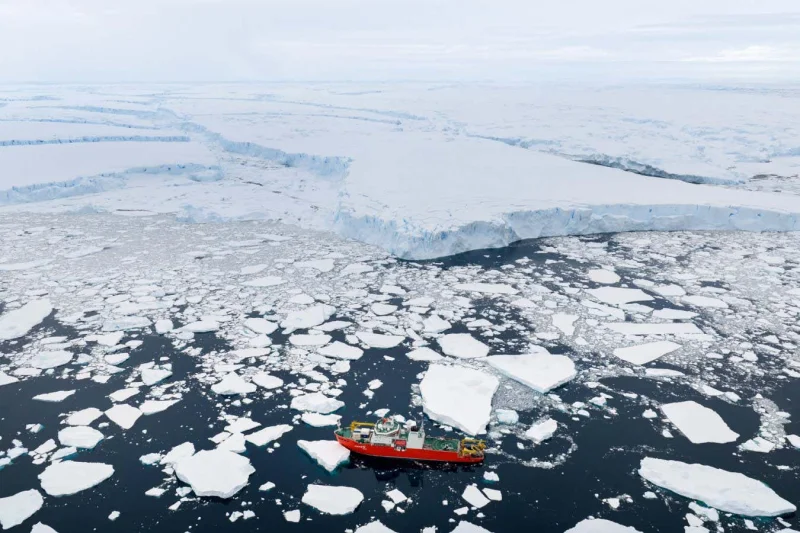
The floating ice shelf in front of Antarctica’s Thwaites glacier is on the verge of breaking away, with satellite images showing alarming signs that the Thwaites Eastern Ice Shelf will imminently detach. The shelf is already tearing apart around the point that has helped hold it in place.
Thwaites is the world’s widest glacier, about the size of Britain, and it already accounts for 4 per cent of all global sea-level rise. If it collapses, scientists expect a domino effect through the entire West Antarctic ice sheet, which could add 3.3 metres to sea levels.
The eastern shelf is not a small fringe of ice. It covers about 1,500 square kilometres and is roughly 350 metres thick, but by some measures the break-up is already under way. Huge fractures are opening around the pinning point and along the grounding line, the boundary where the glacier meets the ocean and starts to float.
The changes are being driven by thinning from melting linked to shifts in ocean circulation, while changes in ice-flow dynamics are pushing the shelf into the pinning point instead of letting it move steadily outward. The result is a brittle front that is snapping under strain. Karen Alley, who was at the shelf in 2019/2020, said she no longer recognises it in current satellite images. “It’s dramatic,” she said. “I don’t recognise the shelf. There are huge gashes where there used to be none.”
Her account matches what other researchers are seeing from orbit. Christian Wild said large areas are suddenly falling to pieces and likened the pattern to a windscreen shattering. He added that the shelf’s flow rate tripled from January 2020 to January 2026, reaching just over 2,000 metres per year, and said it had accelerated further in the past five months. “It’s essentially in free fall now,” he said.
The speed matters because ice shelves float out over the ocean and buttress the flow of ice from the continent behind them. Once they fail, the glacier feeding them can move faster, and at Thwaites that process could help trigger wider instability across West Antarctica. The grounding line has also seen new rifts open in recent years, giving the shelf more ways to split apart.
Rob Larter said scientists have already prepared an obituary press release so they will not be caught unprepared when the shelf finally goes. That is a telling sign of how close the team thinks the break is. The remaining question is not whether Thwaites is under pressure, but how much more of the glacier will be pulled into the collapse once this floating front gives way.
