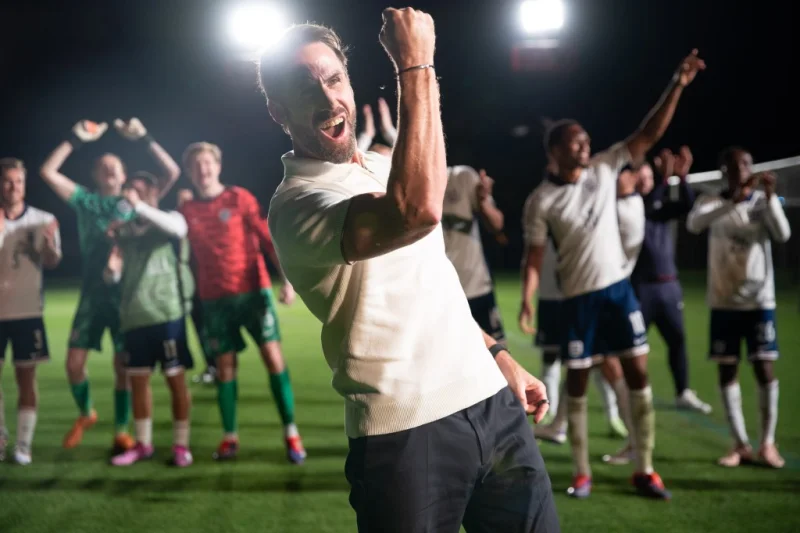
James Graham says he would not want England’s players to watch Dear England before the World Cup, because he wants them focused on the tournament rather than on his drama about Gareth Southgate’s side. Speaking at the London launch of the adaptation, the playwright said he would not want to be responsible for disrupting England’s best chance of winning the World Cup in a long time.
That warning lands just as the prepares to launch Dear England next Sunday, with the World Cup set to kick off in North America in a few weeks. The timing gives Graham’s words unusual weight: the story he wrote for the stage is now heading to television while the team it depicts is trying to write a new chapter of its own.
Dear England is the adaptation of Graham’s hit stage play, produced by Left Bank, and it stretches beyond the original West End version into the past decade of English soccer. Graham said he was glad Southgate did not come to see the play during the final tournaments, because he believes the real figures at the heart of the story should own it themselves. “I’m glad [Southgate] didn’t come and see it during the final tournaments because he is the storyteller and those players are the storytellers, and their story shouldn’t be corrupted by my version of it,” he said.
Graham named the play after the emotional open letter Southgate wrote to the public after the pandemic, and the drama has become closely tied to the manager’s era since he took over in 2016. Joseph Fiennes, who plays Southgate, said after meeting him for the first time that he was a “remarkable man and an absolute gent.” The role has helped make the production one of the most visible fictional portraits of modern England football.
The TV version is also moving where the stage version could not. Episodes three and four contain fresh material featuring new manager Thomas Tuchel, which Graham said makes the story feel as if it is advancing at the same moment as the real one. He has also said Southgate should take equal credit with Tuchel if England end 60 years of hurt and win the World Cup, a line that underlines how closely the show is tied to the team’s present and future as much as its past.
That is the tension running through the launch. Graham is promoting a drama about England’s football identity at the very moment the national team is trying not to be distracted by it. The shares World Cup coverage with ITV, and the tournament will put Southgate’s successor, Tuchel, and the players under a glare that no stage play can match. For now, Graham’s message is simple: the real story belongs to the team, not to the writer who turned it into television.