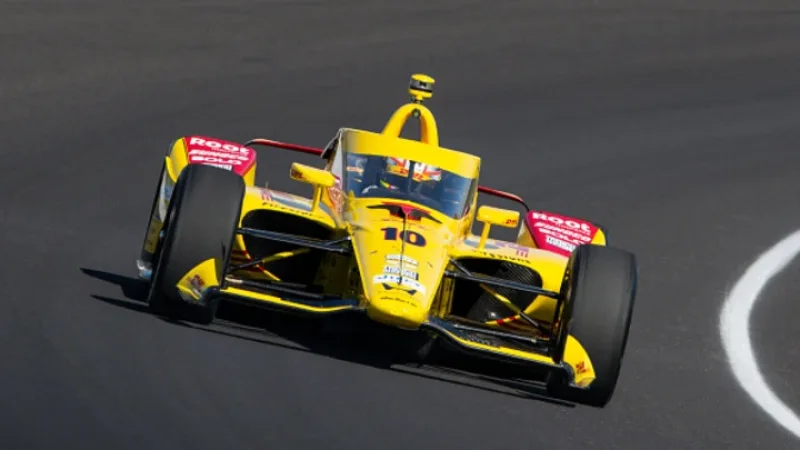
Alex Palou will start the 2026 Indianapolis 500 from pole position after a rain-disrupted qualifying weekend forced officials to compress the format into a single decisive Sunday at Indianapolis Motor Speedway. The defending race winner delivered a four-lap average of 232.248 mph in the Firestone Fast Six, putting him at the front of the field for the 110th running of the Indy 500 on Sunday, May 24.
Palou Delivers Under Pressure
Palou’s pole run adds another major marker to a dominant stretch for the Chip Ganassi Racing driver. The reigning IndyCar champion already entered the Month of May as one of the central figures in the field, and he now has the cleanest possible starting position as he tries to defend his 2025 Indianapolis 500 victory.
It is Palou’s second career Indy 500 pole, following his previous top qualifying performance in 2023. The run also earned him the NTT P1 Award, a $100,000 bonus and valuable championship points, reinforcing his position at the front of the series standings.
The speed was not merely symbolic. At Indianapolis, clean air at the start can be a major advantage, especially in the opening stint when drivers are balancing aggression, track position and tire preservation. Palou still has to survive 200 laps, traffic, pit strategy and restarts, but qualifying first gives him control over the race’s opening phase.
Front Row Sets Up A Strong Race-Day Fight
Alexander Rossi will start alongside Palou after posting a 231.990 mph average for Ed Carpenter Racing. David Malukas completed the front row with a 231.877 mph run for Team Penske, giving Chevrolet two cars in the top three behind Palou’s Honda-powered entry.
That front row carries several storylines. Rossi, the 2016 Indy 500 winner, has experience managing the race from high-pressure positions and gives Ed Carpenter Racing a serious chance to contend. Malukas, now in a major Penske seat, starts with an opportunity to convert raw pace into the biggest result of his career.
The lineup also suggests that race pace may be more open than the pole result alone indicates. Palou was best when it mattered most, but the margins across the front were tight enough to point toward a competitive race rather than a one-car runaway.
Weather Forced A One-Day Qualifying Format
The biggest complication of the weekend came from the Indianapolis weather. Rain washed out Saturday’s planned qualifying activity, forcing the event into a revised Sunday format.
Instead of the usual two-day rhythm, every driver had one initial four-lap attempt beginning at 12 p.m. ET. The fastest 12 advanced to the next round, and the fastest six from that group moved into the final pole shootout. Positions 13 through 33 were set from the opening runs.

That format created sharper pressure than usual. Teams had less room to adjust between attempts, and drivers had fewer chances to recover from a small balance miss, wind shift or imperfect run. The condensed schedule rewarded teams that unloaded with speed and made clean decisions quickly.
Sunday’s weather was far more cooperative for qualifying, with warm conditions and enough track time to complete the pole run. The broader Indianapolis forecast still matters this week, with humidity, breezy conditions and thunderstorms possible during early-week practice before conditions moderate later in the schedule.
Why Indianapolis Weather Matters So Much
Weather is never background noise at the Indy 500. Air temperature, track temperature, wind direction and humidity can all change how a car behaves across four corners that already drive differently from one another.
A warmer track can reduce grip and force teams to trim their setups more carefully. Gusty wind can unsettle cars entering Turn 1 or Turn 3, where commitment is highest. Rain is a harder barrier: Indy cars do not qualify or race on the oval in wet conditions, so schedule flexibility becomes essential.
That is why the Saturday washout was more than an inconvenience. It altered the rhythm of the weekend and changed the pressure profile for teams. With the field now set, the next question is whether race-day weather on May 24 allows the event to run cleanly and whether changing temperatures make the race more strategic.
The 2026 Indy 500 Field Now Turns To Race Setup
Qualifying speed and race speed are related, but they are not the same. The coming sessions will shift attention from raw four-lap pace to running in traffic, tire degradation, fuel windows and pit-stop execution.
Palou starts from the best position, but Indianapolis rarely rewards only the fastest single car. Winners often emerge from strategy calls, late caution timing and the ability to pass in dirty air. The 500-mile distance also places a premium on patience; mistakes in the first half can erase even the strongest qualifying effort.
Monday practice and Carb Day on Friday will be important for teams trying to understand how their cars behave in packs. For contenders starting deeper in the field, those sessions are the chance to find a race balance that can overcome qualifying position.
Race Week Begins With The Stakes Raised
The pole has clarified the front of the field, but it has not settled the 2026 Indianapolis 500. Palou enters race week with momentum, Rossi and Malukas give the front row real depth, and the condensed qualifying format has already shown how quickly weather can change the shape of the event.
The race is scheduled for 12:30 p.m. ET on Sunday, May 24, after pre-race coverage begins earlier in the day. With 500 miles ahead, qualifying has given Palou the first advantage. The next test is whether he can turn the cleanest starting spot in Indianapolis into another victory at the Brickyard.