


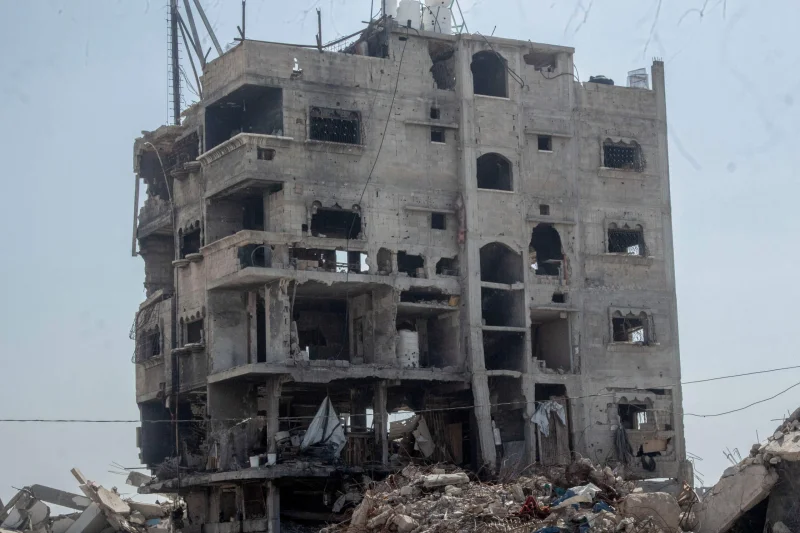
Omer Bartov is back at the center of one of the most bitter debates over Gaza, this time with a new book that reaches beyond the war and into the deepest arguments over Jewish and Palestinian history. The Israeli-American historian, a scholar of genocide now based at Brown University, says the story of Israel and Palestine cannot be understood without confronting two catastrophes: the Shoah and the Nakba.
In mid-2025, Bartov revised the view he had laid out in a guest essay on Nov. 10, 2023, saying then that it was very likely war crimes and crimes against humanity were happening in Gaza but that there was no proof genocide was taking place. Now, in a second Times essay, he says plainly, “I can recognize one when I see one.” That shift matters because Bartov has taught genocide classes for a quarter of a century and speaks as someone who has spent his career studying how mass atrocity is named, denied and remembered.
His new book, Israel: What Went Wrong?, is framed as a historical and moral reckoning with the intertwined lives of Israelis and Palestinians. Bartov argues that the Shoah and the Nakba are “inextricably linked historically, personally and as part of a politics of memory,” and that they have “become constitutive of Israeli and Palestinian national identities.” In his account, the turn in 1948 was tragic and enduring: the resurrection of one people meant the destruction of another people.
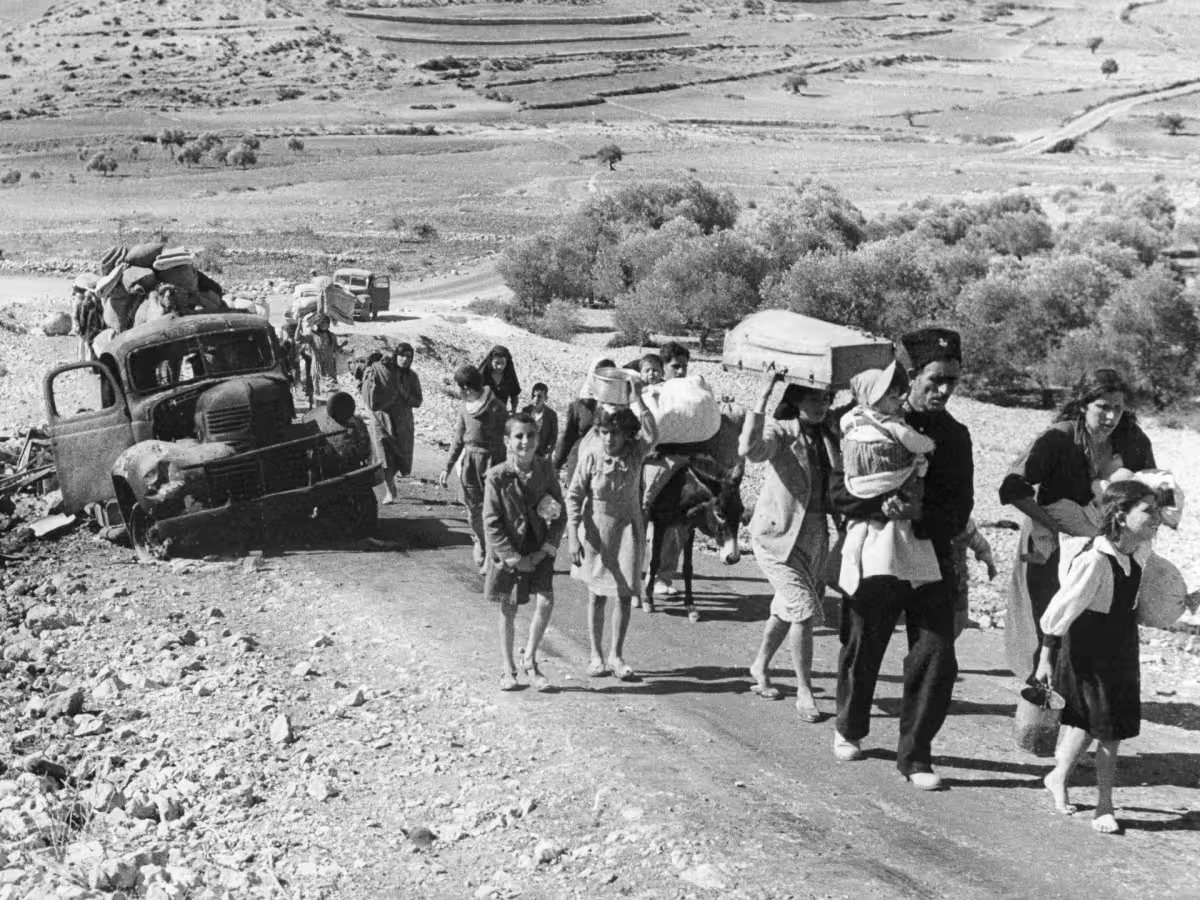
That argument reaches back into Bartov’s own family history. He underscores that early Zionist pioneers included his father and grandfather, but says they were also offspring of mutilated families decimated by the Holocaust. For him, the past is not abstract. It is carried in bloodlines, memory and national narratives that still shape what both societies believe happened, and what they think they are owed.
Bartov also insists that history was not locked into its present course. He says what went terribly wrong since 1948 was inevitable only in retrospect, and that an alternative path shaped by a Zionism faithful to Enlightenment ideals was not impossible. In his telling, the history of the past eight decades could have gone in a liberal and democratic direction. That possibility, he says, was lost when one national revival was pursued alongside another people’s dispossession.
The immediate backdrop is the war set off by the Hamas massacre on Oct. 7, 2023, when hundreds of Israeli men, women and children were killed. Bartov says Israel's response was even more disastrous. His new intervention lands at a moment when the language used to describe Gaza is itself a battlefield, and when one of the world’s best-known genocide scholars has decided the label he once resisted now fits.
His book also places him in a wider historical tradition, comparing his own effort to Marc Bloch's Strange Defeat, written after France's collapse in 1940. That comparison signals the scale of Bartov’s project: not just to chronicle a war, but to explain how societies can lose their bearings while believing they are preserving their future. In Bartov's view, the story of Israelis and Palestinians has been shaped from the start by two catastrophes, and the consequences of that history are still unfolding.
