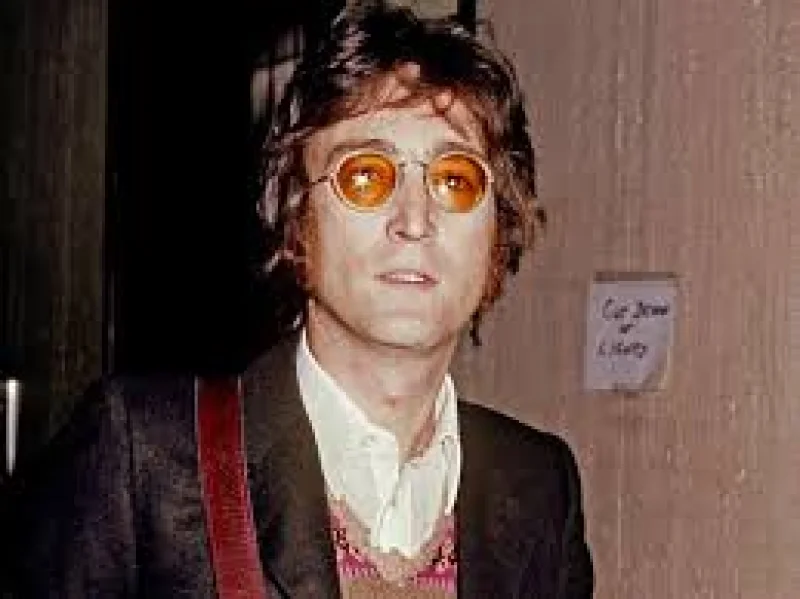
Steven Soderbergh’s new documentary about John Lennon and Yoko Ono landed at the Cannes Film Festival on Saturday with a built-in argument over how it was made. “John Lennon: The Last Interview” relies on surviving tapes from a two-hour conversation the couple gave on Dec. 8, 1980, but about 10% of the film uses artificial intelligence to visualize moments that could not be shown directly.
That choice drew an immediate backlash in Cannes. Soderbergh said he accepted an offer to use Meta’s AI software for the hard-to-visualize passages, and he argued that the method should be visible rather than hidden. “I feel like I owe people the best version of whatever art I’m trying to make and total transparency about how I’m doing it,” he said, adding, “That was part of the deal.”
The film turns on one remarkable day in the Dakota Apartments in New York, where Lennon and Ono were speaking to a San Francisco radio crew while promoting their new album, “Double Fantasy.” The setting has long carried a heavy charge because Annie Leibovitz also shot her famous portrait of Lennon wrapped around Ono that same day, the image that later became one of the most familiar pictures of the era. Soderbergh said he was drawn to the pair’s openness in the recording and described the apartment as a place where “the world took place in one day.”
The documentary comes wrapped in a larger question about authenticity at a moment when the use of AI in film and media is under sharper scrutiny than ever. Soderbergh said the uproar that followed the film’s public disclosure earlier in the year showed why he wanted to be explicit about how the movie was assembled. “Transparency is so important,” he said, warning that people outside creative work often do not realize how widely the technology is already being used to shape what they see and hear.
What complicates the debate is how modest the AI sections are said to be. They account for about 10% of the film and are described as fairly banal, not dramatically different from special effects. Soderbergh cast himself as a kind of self-policing editor — “I’m like my own whistle blower,” he said — but Cannes critics still reacted sharply, suggesting that even limited digital reconstruction is enough to set off alarms when it is attached to a figure as closely watched as Lennon.
That makes the film less a nostalgia project than a test case. It revisits a conversation that took place just hours before history closed in around Lennon, and it asks audiences to decide whether the technology used to recreate parts of that day helps reveal the moment or makes it harder to trust. For Soderbergh, the answer is already clear: the method is part of the story, and he says the audience should be told exactly how he made it.