


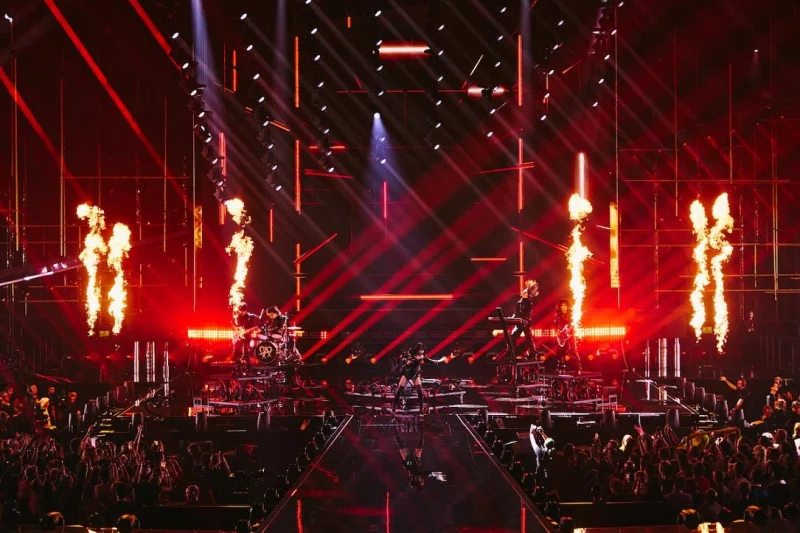
Romanian singer Alexandra Căpitănescu will take the Eurovision stage today in the second semifinal, going third out of 15 contestants chasing a place in the grand final. Bulgaria’s DARA will open the show, while Azerbaijan’s JIVA is also on the lineup for the night.
Căpitănescu enters the contest with a profile that goes beyond one television win. She won The Voice of Romania in 2023, then used the next year to release her debut EP, Căpitnu, and several solo singles. She also writes most of her songs with musicians from her own band and Romanian composers, a sign that her work is being built around collaboration rather than a one-off breakout moment.
That background matters because Căpitănescu is not arriving in Eurovision as a full-time pop star with nothing else on her mind. She is pursuing a master’s degree in the physics department in Bucharest after earning a bachelor’s degree, and she has said she plans to work as a medical physicist. In a line that captures the split-screen life she has built, she has said: “Science teaches me discipline, and music teaches me freedom.” She also put it more plainly: “I don’t want to be louder than my music,”
That balance has shaped the way she has already worked in public. She has performed at Electric Castle, and she often prepared for exams in dressing rooms or while on tour. The result is an artist whose path is unusually grounded for a Eurovision entrant: a young performer moving between rehearsals, studies and stage dates without treating any of them as temporary distractions.
Romania Eurovision 2026 also lands in a contest week already marked by tighter scrutiny around the rules. Eurovision organizers have explained the voting system and issued a warning to Israel for violating the voting rules, a reminder that the event is being watched as closely for process as for performance. Against that backdrop, the second semifinal is more than a showcase; it is the gatekeeper to Saturday’s final, and Căpitănescu has one shot today to turn her growing profile into a place on the bigger stage.
She has been described as one of Romania’s most promising young performers, in part because her music blends modern pop, indie and emotional ballads without leaning on flashy stage outfits or elaborate choreography. That restraint is part of the pitch. If she advances, it will be because the song and the voice carried her there. If she does not, the story will still be the same one that has followed her from Bucharest classrooms to touring dressing rooms: a singer trying to keep music and science in the same life, and doing both in public.
