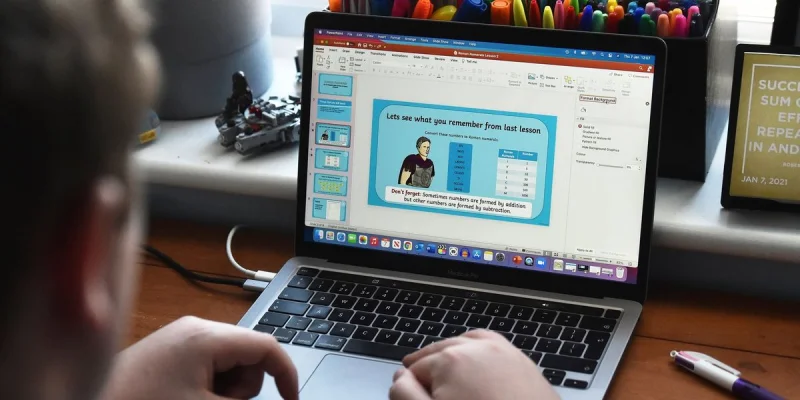
Sweden is reversing one of the most aggressive digital learning pushes in Europe, telling schools to put books and handwriting back at the center of the classroom after years of expanding screen use. The shift, backed by the right-wing coalition that came to power in 2022, is now moving from political message to classroom practice.
Last year, the Ministry of Education and Research introduced rules saying only analogue learning tools, such as books, should be used for children under the age of two, while the use of non-analogue tools should be greatly restricted for all other children. The new guidelines say the aim is to “get back to basics and re-establish a strong knowledge-based school system with the focus of early grades being on basic skills such as reading, writing and arithmetic.”
For Sweden, the change is striking because the country was long treated as a pioneer in edtech. In the late 2000s, laptops became mainstream in Swedish classrooms. By 2015, around 80 per cent of young Swedes at state-funded high schools had access to a digital device, and in 2019 tablets became compulsory in Swedish preschools. The new direction now runs against that history, not with it.

Ulf Kristersson has framed the change in a phrase that has become part of the debate: “från skärm till pärm,” or from screen to page. A 2023 consultation involving academic researchers, teaching organisations and public agencies helped shape Stockholm’s shift in stance before the tighter rules were put in place last year.
The reversal also reflects growing concern over what screen time is doing to children. Dr Sissela Nutley has warned about the use of technology in schools, saying reading on a display is less effective than reading on paper and pointing to evidence that screen use affects infant development. That argument has given the policy a scientific edge as well as a political one.
Sweden is not moving alone. Dozens of countries are now trying to move students off digital devices and back onto books and handwriting, a broader correction after years of classroom technology being sold as a cure-all. In England, Bridget Phillipson has announced a £23million initiative to roll out AI tutoring systems across secondary schools as early as this summer, showing how sharply education policy is splitting between more technology and less of it.
The tension in Sweden is that the country that helped normalize devices in schools is now trying to unwind the habit before the habits are fully set. Its leaders are betting that early reading, writing and arithmetic matter more than the latest tool, and that the first years of school should be about building knowledge, not managing screens.