


Climate change is slowly draining oxygen from rivers around the world, and a new study says the decline has already begun to reshape freshwater ecosystems. Researchers in China used satellites and artificial intelligence to track oxygen levels in more than 21,000 rivers since 1985 and found that river oxygen has dropped an average of 2.1 percent.
The findings, published in Science Advances, point to a problem that is moving quietly but broadly. If the loss continues at its current pace, the world’s rivers could lose another 4 percent of their oxygen by the end of the century, and in some cases close to 5 percent. That would be enough in some regions to suffocate fish and create dead zones in rivers across the eastern US, India and the tropics.
Qi Guan, one of the researchers behind the study, said deoxygenation becomes a problem for fish and for people who depend on rivers once oxygen drops to that level. He warned that the low oxygen levels can trigger ecological crises, including biodiversity decline, worsening water quality and fish deaths. The study says about 63 percent of the oxygen loss problem is tied to warmer water, which holds less oxygen than cooler water.
The trend matters now because the warming is not abstract. It is already altering rivers at a scale that can be measured from space, and the numbers suggest the pressure will keep building this century. Even with moderate-to-high increases in carbon dioxide emissions, rivers in the eastern US, the Arctic, India and much of South America are projected to lose about 10 percent of their oxygen by the end of the century.
The study also points to what is driving the decline beyond heat alone. Nutrient pollution from fertilizer and urban runoff, dam construction and changes in flow and wind all contribute to the oxygen loss. Scientists say those forces could combine with climate change to make river water far less hospitable for fish and other life.
That is where the warning turns familiar to anyone who has watched other waterways collapse into low-oxygen stretches. Researchers say river dead zones could appear the way they have in the Gulf of Mexico, Chesapeake Bay and Lake Erie. Karl Flessa said the pattern could mean “a future of more stinky dead zones (hypoxia), especially during heat waves,” adding that if a fishing hole gets too warm, oxygen levels fall and there may be no fish left to catch.
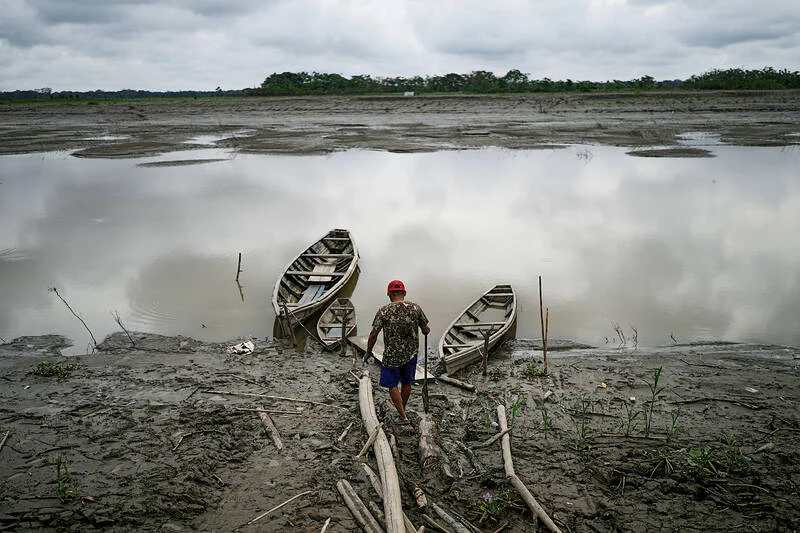
The danger is already evident in parts of the world that are under intense pressure. India’s heavily polluted Ganges River was losing oxygen more than 20 times faster than the global average earlier this century. Since 1980, dead zone spots in the Amazon have risen by about 16 days per decade, while oxygen stress in rivers worldwide has increased by 13 days every decade and dead zone occurrences by about three days a decade.
For now, the study is less a forecast than a warning that river health is changing faster than many people can see it. The next test is whether governments can cut the heat-trapping emissions and local pollution that are pushing rivers toward less oxygen, fewer fish and more dead zones before the end of the century makes the trend irreversible.
