


The Trump administration told western state leaders Wednesday it is drawing up a 10-year plan for dealing with water shortages on the Colorado River, a framework that would set specific rules requiring water reductions and be reassessed every two years. Federal officials delivered the message to state water managers in Phoenix as the seven states remain deadlocked over how to divide shrinking supplies.
Tom Buschatzke said the federal drought plan Colorado River proposal could allow mandatory cutbacks of up to 3 million acre-feet a year in Arizona, California and Nevada, or as much as 40% of the three states’ combined allotments. That would be a sweeping shift for a river that supplies water for about 35 million people and 5 million acres of farmland, with farms using about three-fourths of the water drawn from the system.
The proposal arrives after months of stalled talks. In January, the Trump administration released a draft outline of four alternatives for dealing with the deepening shortages, and Scott Cameron pressed state officials to reach an agreement by mid-February through what he described as a consensus-based approach. The deadline passed without a deal. Since then, California, Arizona and Nevada have offered to use roughly 1.6 million acre-feet less annually over the next two years, a proposal meant to govern water sharing in 2027 and 2028.
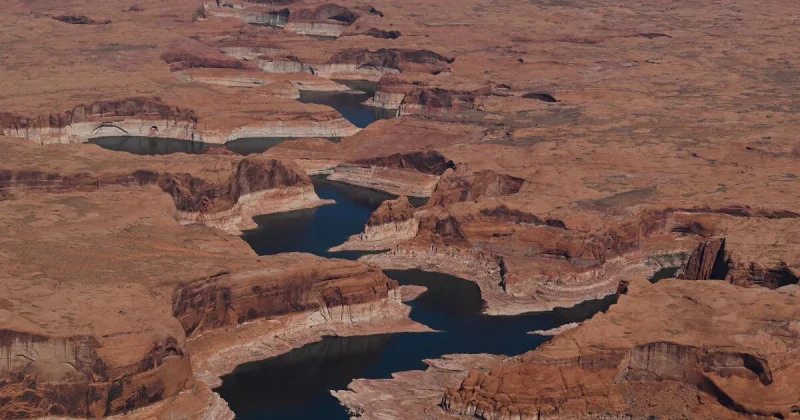
That offer is only part of a larger and still unresolved fight over the river. The disagreement pits the three downstream states against Colorado, Wyoming, Utah and New Mexico, with the upper basin states now calling for a mediator to try to break the impasse. The battle comes as Lake Mead and Lake Powell remain severely depleted and continue to drop, raising the pressure on negotiators to avoid a deeper crisis.
For the region, the stakes are no longer abstract. The Colorado River is a major water source for Southern California and much of the Southwest, and over the last three years the states have relied on voluntary cutbacks and federal payments to farmers who agree to leave fields dry part of the year. The new federal framework would move the process closer to enforceable limits, and the next test is whether the seven states can narrow their differences before the river’s weakening reserves force a harsher answer.
