


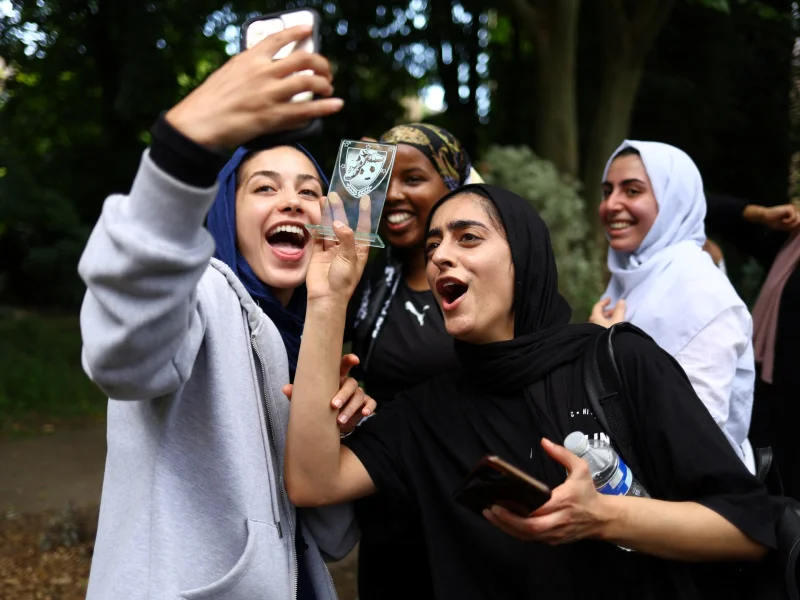
The Muslim Council of Britain said this week that Muslims make up 6.5 percent of the population of England and Wales, and that nearly half are under 25. The report, British Muslims in Numbers, says the median age of British Muslims is 27, fully 13 years younger than the national average.
That youth profile matters now because researchers say a move to lower the voting age to 16 could add about 150,000 more Muslim voters to the electorate. The Labour government proposed that change last year, but it still needs approval from MPs in the House of Commons and peers in the House of Lords before it becomes law.
The report draws on census data from 2001, 2011 and 2021 to argue that British Muslim life is being misread through an outdated lens. Miqdad Asaria, one of the report’s authors, said this is a young, British-born, highly educated generation, and that politicians who still think of Muslims as outsiders are working from a script that is 20 years out of date. He said there is no Muslim voting bloc, only nearly four million people with the full range of political views expected in any population that size.
Behind the headline numbers is a population that is large, local and varied. British Muslims include Pakistani communities in Bradford, Somali communities in Cardiff, Bangladeshi families in Tower Hamlets, white British converts and Arab professionals in London. The report says Muslim lone-parent households with dependent children account for 10.3 percent of Muslim households, or about 110,000 households, compared with a national average of 6.9 percent. Home ownership among Muslims stands at 41.5 percent, well below the national figure of 63 percent.
Those gaps are part of the friction the report wants to push into the open. Asaria said this is not a story of cultural failing, but of structural disadvantage that has barely shifted in 20 years. He said British Muslims are still working extraordinarily hard against headwinds, even as older assumptions about them continue to shape public debate.
Mohammed Sinan Siyech said younger Muslims are politically engaged through social media, with many voters more aware of what is happening around them because of direct observation and an increase in alternative news and influencers focused on political issues. He also said Islamophobia is rising alongside the growth of the far right, a warning that gives the report’s numbers sharper political weight today.
The result is a picture of a community that is younger, more digitally connected and more politically relevant than much of Britain tends to assume. The fight now is not over whether British Muslims are part of public life. It is over whether the country’s politics will catch up with the people already reshaping it.
