


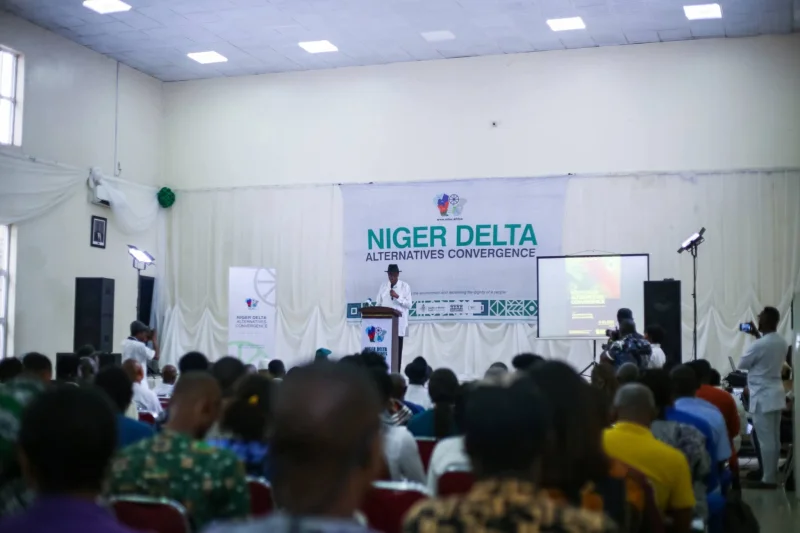
Civil society groups, labour unions, environmental activists and community leaders from across the Niger Delta on Thursday demanded the immediate publication of payments made into oil and gas decommissioning and abandonment funds. They also called for a full audit of abandoned oil wells and petroleum infrastructure, after meeting at the 5th Niger Delta Alternatives Convergence in Uyo, Akwa Ibom State.
The gathering, held under the theme “Decommissioning and Accountability,” ended with a sharp call for urgent remediation, ecological restoration and reparations for polluted communities. Participants said every abandoned and leaking oil well in the region should be treated as a crime scene, reflecting the scale of the damage they say has built up over decades of oil exploration.
The convergence was convened by the Health of Mother Earth Foundation with civil society organisations, labour groups, researchers, environmental experts, women and youth groups, and traditional institutions from across the nine states of the Niger Delta. Their communiqué pointed to the failure of regulators and operators to enforce decommissioning obligations once oil production ended, arguing that the region has been left to absorb the cost of abandoned facilities long after the profits have been taken.

Among the cases cited were abandoned wells in Otuabagi, Bayelsa State; the 2007 eruption at the Shell Petroleum Development Company well, Ibibio-1, in Ikot Abasi Local Government Area of Akwa Ibom State; the Ororo-1 well fire in Ondo State, which has reportedly burned since 2020; and the Alakiri wellhead fire in Rivers State, which has been ongoing since 2024. The examples were used to press for immediate cleanup and a wider review of how oil assets are handled when production stops.
The stakeholders also criticised the Nigerian Upstream Petroleum Regulatory Commission and the Nigerian Midstream and Downstream Petroleum Regulatory Authority, accusing both agencies of weak oversight and poor enforcement of environmental accountability frameworks. They faulted oil companies and the Nigerian government for failing to disclose payments into decommissioning and abandonment funds in the annual reports of the Nigeria Extractive Industries Transparency Initiative.
Section 233 of the Petroleum Industry Act 2021 provides for the establishment of a Decommissioning and Abandonment Fund, to be held in an escrow account by a financial institution not affiliated with the oil and gas company. But the communiqué said transparency around those payments remains missing, even as communities continue to live with polluted water, damaged land and fires that have not gone out.
The group’s message on Thursday was blunt: the Niger Delta should not be asked to wait while abandoned wells keep leaking and regulators look the other way. Their next demand is legislative, too, with calls for amendments to the Petroleum Industry Act to strengthen environmental responsibility provisions, decommissioning obligations and corporate accountability.
