


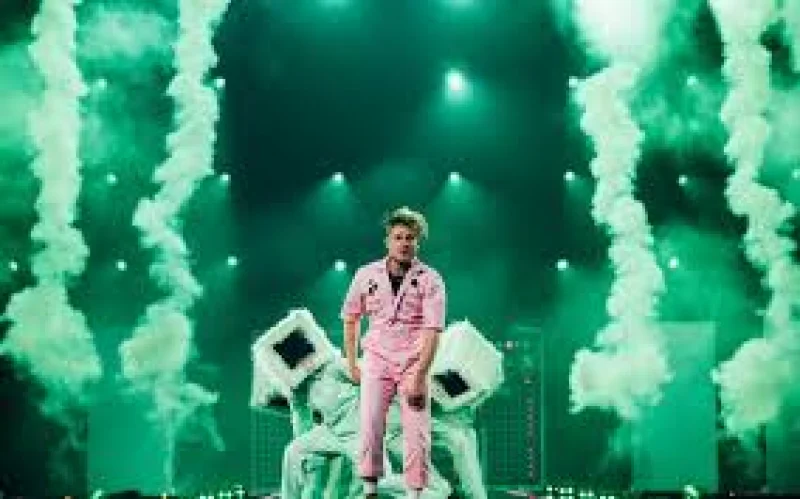
Sam Battle, the musician better known to fans as Look Mum No Computer, is representing Britain at the 70th Eurovision song contest after a path that began far from the glitter of the contest stage. He said he never set out to do Eurovision, but a message he and his friend Johnny sent to the eventually put him in line for it.
"I didn’t really plan to do Eurovision at all," Battle said. He and Johnny emailed asking, "Is there any way we can get on it?" That offhand attempt has ended with Battle carrying a cult following built around music, invention and a taste for the bizarre into one of pop’s biggest televised events.
Battle first made his name as lead singer with the indie band Zibra in the mid 00s, before the group split up in 2016. After that, he put more of his energy into Look Mum No Computer, a side project that grew into its own identity and helped him amass more than 700,000 subscribers on YouTube. His videos and performances turned everyday technology into instruments and sound machines, and that blend of music and esoteric engineering became the basis of his following.
He has built a synth entirely from rejigged Furby toys and a modular synthesiser called the Megadrone, a collection of 1,000 oscillators connected together. He also runs This Museum is (Not) Obsolete in Ramsgate, where resuscitated audio technology is free for the public to grab and mess with. Battle has described the place as a collection of obsolete technology that people can interact with, and said the hands-on approach is part of the point.

"It feels like a village battle of the bands, but international!" he said of Eurovision. The line fits a performer whose work has long sat at the edge of novelty and engineering, even as it drew a serious online audience. Battle’s project has also included turning Sega Megadrives into working synths and Henry vacuum cleaners into flame-throwers, reinforcing the same instinct: take the familiar, open it up and make it sing or spark.
That collision of folk experiment and mass spectacle is what makes his appearance stand out. Eurovision is built on polish and scale, while Battle’s appeal has come from clutter, curiosity and the sense that anything with wires can become playable. He is not arriving as a conventional pop export, but as a maker whose audience already knows he will try almost anything once.
At the museum in Ramsgate, that same approach shows up in the way visitors are allowed to handle the exhibits. Battle said, "Oh yeah," when describing how the public uses the space, adding that "the kids can be really heavy handed, often on purpose, but they almost never actually break anything. It’s good, they should be able to get stuck in!" That attitude helps explain why his work has travelled so well online and why a Eurovision berth now feels less like a detour than the next logical jump.
The question now is not whether Battle fits the contest’s image. It is whether a performer who built his name by remaking old technology into strange new instruments can translate that unruly energy to Britain’s biggest live international stage and make it land in front of an audience far larger than the one in Ramsgate.
