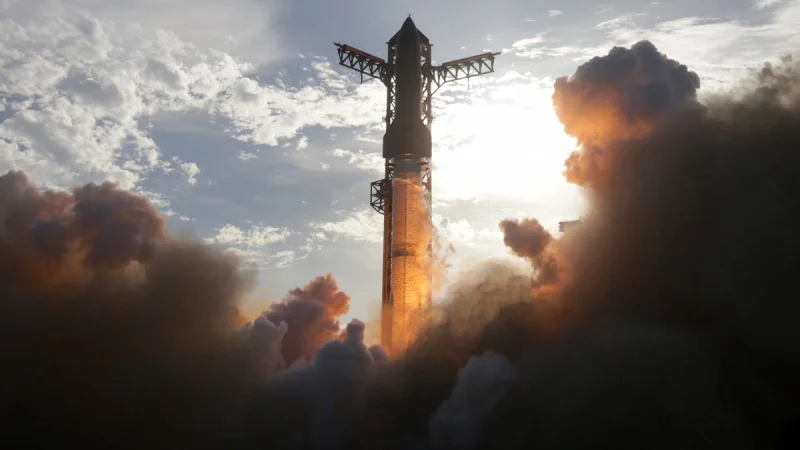
SpaceX says it is planning the first launch of its Starship version 3 rocket as soon as May 19 from Starbase in South Texas, with liftoff set for 6:30 p.m. Eastern. The flight, known as Flight 12, would be the first time the company sends the newest version of the massive rocket into the air.
The announcement on May 12 came a day after SpaceX carried out a wet dress rehearsal on the pad, fueling the Starship upper stage and Super Heavy booster before standing the vehicle down for launch day. The upcoming flight will use a new launch pad at Starbase, and SpaceX says the mission’s main goal is to show that the redesigned pieces can work together in the flight environment for the first time.
Version 3 is not just another update. SpaceX says it includes upgrades to both stages, including improved Raptor engines, and that the architecture has been redesigned to support full and rapid reuse after years of testing and refinement. The company considers this version critical because it is the one planned for orbital missions and for deploying next-generation Starlink satellites.
The flight profile will look familiar in some ways, but not entirely. The Super Heavy booster will not try to return to the launch site. Instead, it is planned to make a soft splashdown in the Gulf of Mexico. The Starship upper stage will deploy 22 mass simulators that model next-generation Starlink satellites, with two of them carrying imagery payloads to scan the vehicle’s heat shield. Starship will also relight a single Raptor engine during the mission.
Reentry will be used to push the vehicle harder. SpaceX says Starship will test maneuvers intended to intentionally stress the ship during return, and one heat shield tile was deliberately removed to see how aerodynamic forces affect the neighboring tiles. Those details make the launch more than a simple demonstration flight; they turn it into a direct test of how the vehicle behaves when key systems are exposed to the kind of conditions that matter most.
The wait for this launch has been long. SpaceX flew the previous Starship test flight in October, the last of version 2, and projected shortly afterward that Flight 12 could take place as soon as January. But the Super Heavy booster originally built for the flight was damaged in November during testing, and the timeline kept slipping. In late January, Elon Musk said on social media that the launch would come in about six weeks, or early March. By early March, he said it was four weeks away. In early April, he said it was four to six weeks away.
Neither Musk nor SpaceX has explained the delays, leaving the schedule shifts to speak for themselves. SpaceX released a mini-documentary last month showing work on Starship, including some of the problems encountered in testing the vehicle and the new launch pad, but the company has not offered a public accounting of what held Flight 12 back. For now, the question is no longer whether version 3 matters; it is whether SpaceX can finally move it from the pad to the sky on May 19.