


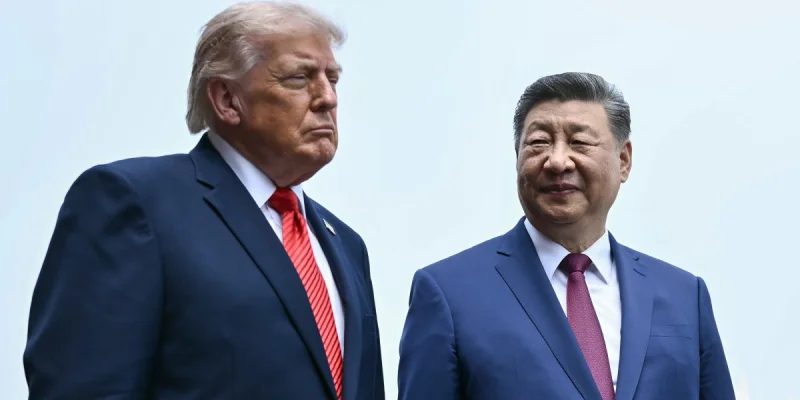
Global stocks sold off on Thursday morning after President Donald Trump returned from his summit with China’s Xi Jinping, with Asia and Europe both sharply lower and U.S. futures pointing to a weak open in New York. South Korea’s KOSPI fell more than 6%, China’s CSI 300 was down 1.12%, and S&P 500 futures were off 1% before the opening bell.
The reaction was harshest in markets that had been hoping for a clearer break in the trade standoff. Trump said China agreed to order 200 planes from Boeing, but the number fell far short of the 500 planes White House sources had suggested could be announced before the trip. Boeing shares dropped 4.73% the previous day and slid another 1.38% in overnight trading, underscoring how quickly traders had priced in a bigger deal.
That disappointment is now colliding with a broader risk-off move across global markets. On Trump’s previous trip to China in 2017, 300 aircraft were sold, so this year’s figure looked modest by comparison. Paul Donovan of UBS said, “Much increasingly scarce jet fuel has been burned to produce nothing of real substance,” capturing the sense that the summit produced more theater than substance for investors.

The tone was also darkened by energy concerns. Brent crude hit $109 per barrel this morning, up from $103 the previous day, after comments from Deutsche Bank’s Jim Reid that markets had lost momentum when Trump said the U.S. doesn’t need the Strait of Hormuz open “at all.” Reid said that has added to fears the Strait could remain blocked for some time, creating a more protracted energy shock for the global economy. Xi, meanwhile, said the two countries had agreed to keep trade ties stable, but the market response suggested traders were not persuaded that stability had been secured.
There is another force at work behind the swing in U.S. equities, and it has little to do with the summit itself. Goldman Sachs said retail trading has recently accounted for roughly 20% of total U.S. equity trading volumes, up from 15% a decade ago, with retail buyers holding about $12 trillion of equities. That means headlines, momentum and sentiment can hit stocks harder and faster than before, especially when investors are already uneasy about tariffs, oil and the pace of diplomacy.
For now, the message from djia today is plain: traders were not impressed by the deal-making, and they are pricing the gap between expectations and reality in real time. The next test is whether the selloff broadens in New York after the opening bell or whether buyers step in to argue that the worst of the disappointment was already in the numbers.
