



Russia test-fired a new intercontinental ballistic missile on Tuesday as Vladimir Putin pressed ahead with efforts to modernize the country’s nuclear forces. He said the nuclear-armed Sarmat will enter combat service at the end of the year.
Putin called the missile “the most powerful missile in the world” and said its separately targeted warheads have a combined punch more than four times higher than any Western counterpart. The Sarmat, designated Satan II by NATO, was built to replace the aging Soviet-built Voyevoda and is meant to replace about 40 of those missiles.
The launch gives Moscow a fresh way to showcase a weapon that has been years in the making and still carries a mixed record. Development began in 2011, the missile has only one known successful test, and it reportedly suffered a massive explosion during an abortive test in 2024. At the time, a satellite image analyzed by CBS News showed a large crater and what appeared to be blast debris on a launchpad at Plesetsk Cosmodrome in northern Russia.
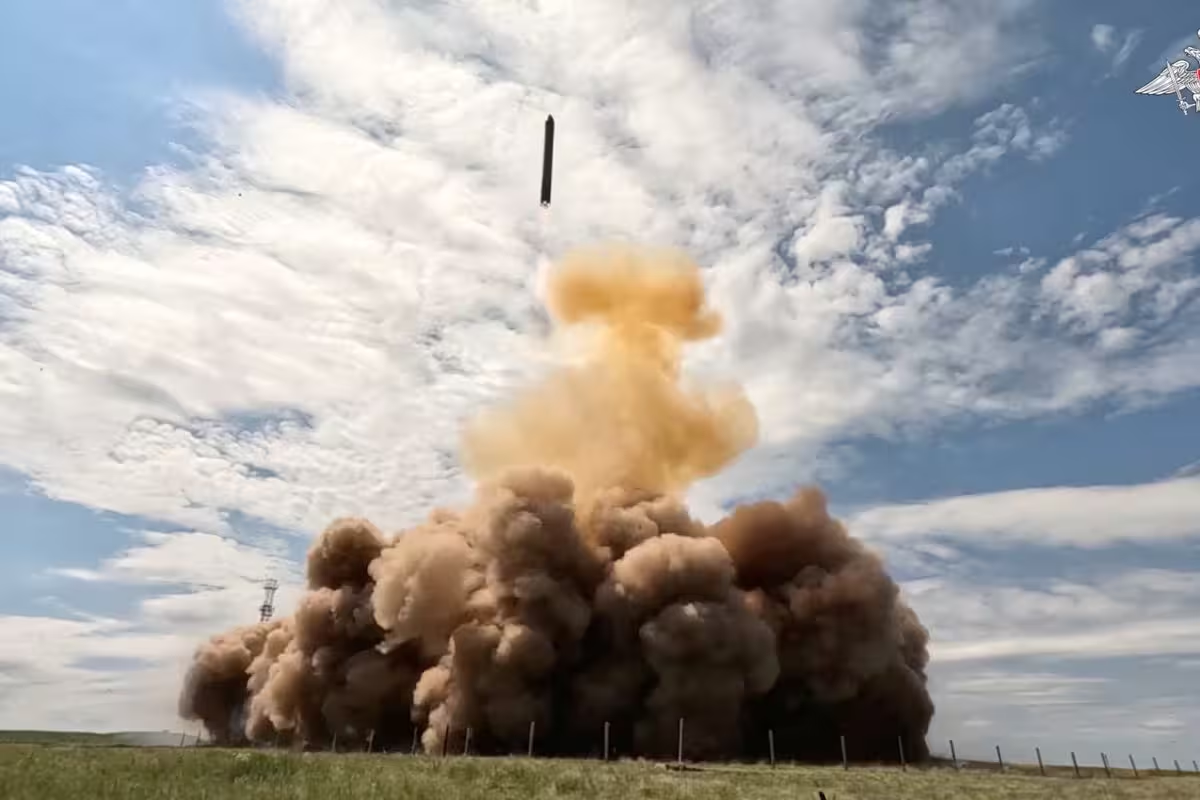
The Sarmat is classified as a heavy ICBM and, according to the Center for Strategic and International Studies’ Missile Defense Project, can carry up to 10 tons in payload. Putin said it is as powerful as the Voyevoda but more precise, can fly on a suborbital path and has a range of more than 21,700 miles.
The timing matters because Russia and the United States are operating without their last remaining nuclear arms pact, which expired in February. That left no caps on the world’s two largest atomic arsenals for the first time in more than a half-century, even as the two countries agreed the same month to reestablish formal, high-level military communications that had been suspended in late 2021.
The Sarmat is one piece of a wider push. Putin unveiled it in 2018 as part of a new generation of weapons he said would make prospective U.S. missile defenses useless, and Moscow has kept modernizing its nuclear triad by deploying new land-based ICBMs, commissioning new nuclear submarines and upgrading nuclear-capable bombers. The first Avangard hypersonic glide vehicles have already entered service, Russia has commissioned the nuclear-capable Oreshnik intermediate-range ballistic missile, and it has used the conventionally armed version of Oreshnik twice to strike Ukraine.
Putin has also said Russia is in the final stages of developing the nuclear-armed Poseidon, widening a modernization drive that now touches every leg of the arsenal. For Washington and Moscow, the problem is not just the new hardware. It is the shrinking guardrails around it.