


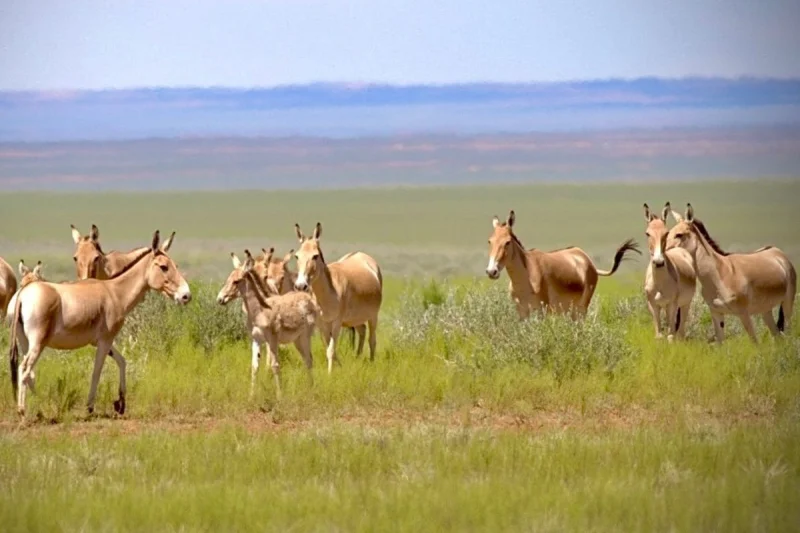
Khulan, the Asiatic wild ass, have returned to eastern Mongolia after more than 65 years away, in one of the clearest signs yet that a long barrier along the Trans-Mongolian Railway can be softened enough for wildlife to move again. Several stretches of fencing were taken down, and a monitored safe passage zone was designated last May near the China-Mongolia border.
Findings published this month in Oryx show the measures are working. Monitoring recorded crossings in recent years, and follow-up surveys found hundreds of khulan on the eastern side of the railway, where the species had been absent for decades. Buuveibaatar Bayarbaatar called the return an extraordinary conservation breakthrough, saying it shows that restoring connectivity in fragmented landscapes can help wide-ranging species recover.
The result matters because the railway fencing had long restricted the movement of khulan and other migratory animals across a critical stretch of steppe and desert habitat. The safe passage zone near the border was left free of fencing, giving researchers a rare chance to test whether wildlife would use the opening without creating new risks for trains. Justine Shanti Alexander said the return reflects years of collaborative work with provincial authorities, border protection agencies and railway managers, along with careful testing of temporary fence gaps that showed wildlife could cross safely without increasing train collisions.
That success comes against the backdrop of a species still under pressure. The Mongolian Gobi supports the world’s largest khulan population, at approximately 91,000 animals, or more than 84% of the global total. The animals still face habitat fragmentation, competition with livestock, illegal hunting and climate change, all of which can quickly erase gains if movement routes are blocked again.
Plans are now advancing for a new local protected area east of the railway, a step meant to secure habitat and support recolonization over the long term. Mongolia has already set aside 13% of its land and water for protection, but the khulan’s return shows that paper boundaries alone do not keep a species safe if fences still cut through its range. For eastern Mongolia, the bigger story is no longer whether the animals can come back. It is whether the landscape can stay open long enough for them to remain.
