

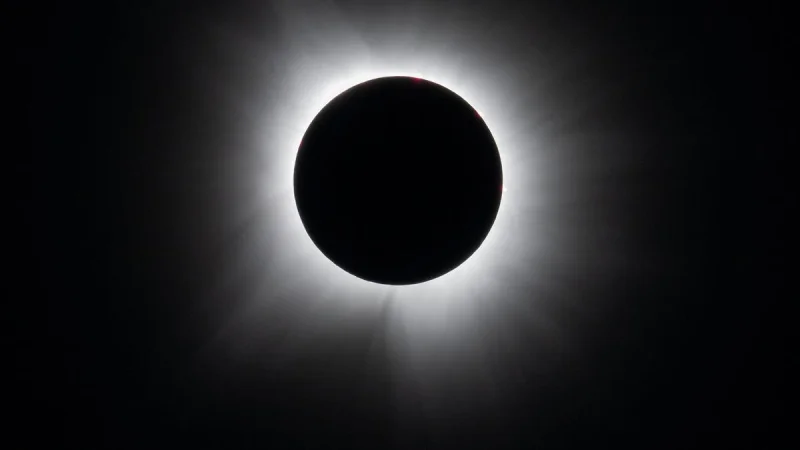
At 1.27pm on 21 August 2017, an Italian-born astronomer and her husband jumped out of their car in Tennessee, put on dark glasses and looked up just in time to catch the eclipse solar they had crossed an ocean to see. They had raced away from Shelby Park in Nashville and stopped at a car park of a printing company, chasing the last clear patch of sky before the moon swallowed the sun.
The sky had been crystal clear that morning, but clouds moved in minutes before totality. For about 50 seconds, the couple got their long-awaited view before another cloud cut it off. The astronomer, who had a doctorate in astrophysics focused on collisions between galaxies, cried as the light changed and birds landed and hushed around them.
She had seen comets, planetary alignments, fireballs, galaxies and northern lights before, but never a total solar eclipse. Since 1999, when she heard stories about the UK eclipse she could not witness from Italy, she had wanted one more chance. She moved to the UK in 2007 and spent the next 18 years chasing partial eclipses of the sun, knowing they were never the same thing as totality.
That difference is the point. On Earth, the apparent sizes of the moon and the sun are the same, which is why one can cover the other and turn daylight into a brief, eerie darkness. During totality, the corona becomes visible. Partial eclipses may be striking, but they do not deliver the same shock, and they do not stop the birds.
What made this day harder to forget was how close the couple came to missing it altogether. The moon was already moving slowly across the face of the sun just before noon, and the clouds arrived only minutes before the moment they had traveled for. Then came the shout from the astronomer: "There! There’s sunlight!" and the hurried effort to keep the view alive as the shadow changed again.
For people in Britain who missed the 1999 eclipse stories or are still waiting for another chance, the answer is far off: the UK is not due another total solar eclipse until 23 September 2090. For this astronomer, the long wait ended in Tennessee, with a few precious seconds of darkness, birds gone quiet and a view she had spent nearly two decades trying to reach.