


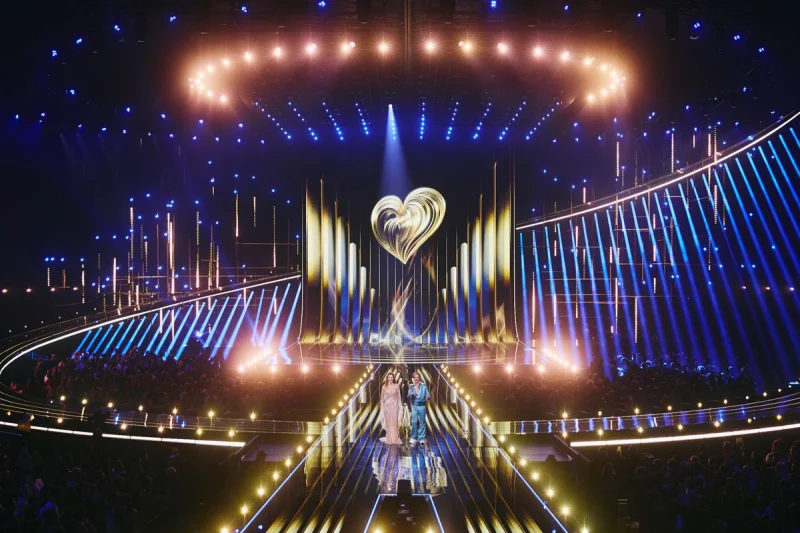
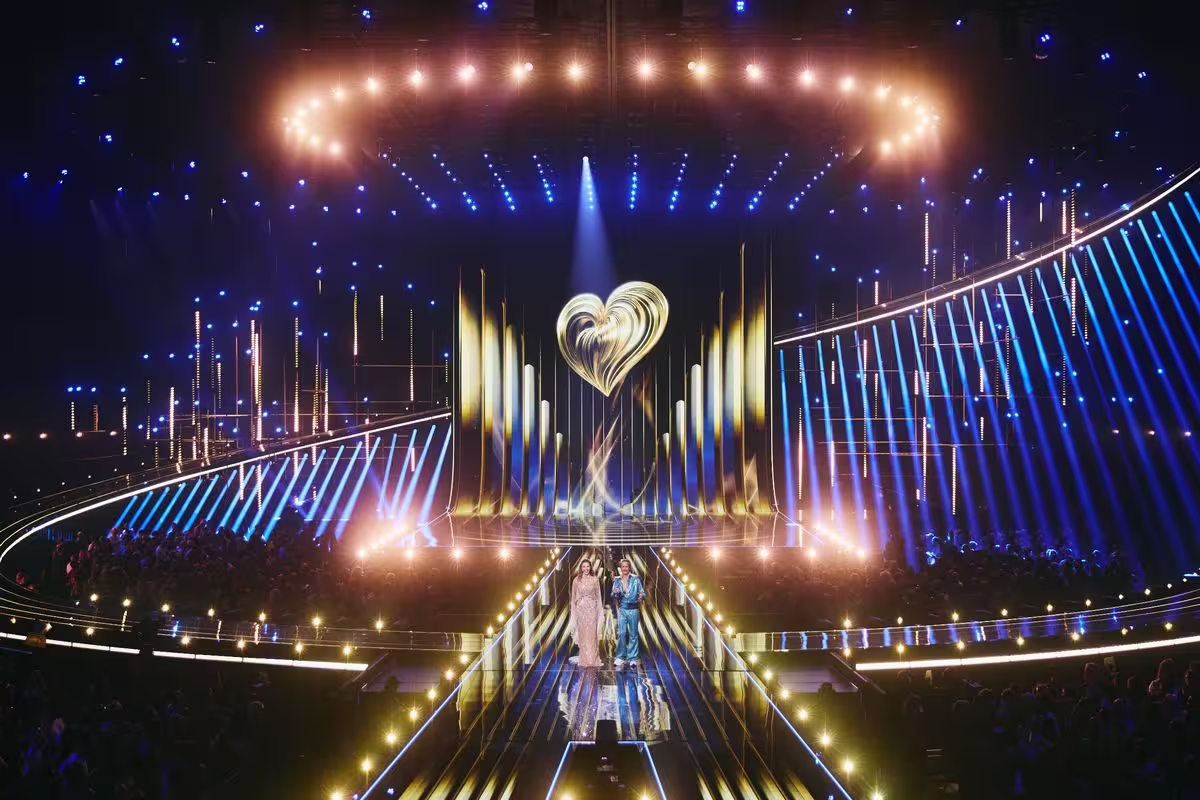
The field for the Eurovision Song Contest 2026 final is now set, with 25 countries heading to Saturday’s show in Vienna, Austria after the second semi-final finished tonight. Ten acts advanced from a night that saw 18 countries compete for the remaining places.
The qualifiers from tonight joined Belgium, Croatia, Finland, Greece, Israel, Lithuania, Moldova, Poland, Serbia and Sweden, while the UK, Italy, Germany and France were already through as the Big Four and Austria was guaranteed a place as host. The result leaves the question of who won Eurovision 2026 still unanswered, but it has already narrowed the race to one of the most open finals in years.
Mark Savage said all of the favourites sailed through the semi-finals, and he pointed to Delta as one to watch. He also said there was a possibility that Israel could “romp home in the public vote,” a reminder that the contest’s biggest result may be shaped by viewers as much as by the juries. The UK, he noted, now has “two chances to win (or, more realistically, lose) at the grand final” after the official entry, Look Mum No Computer, was ranked 21st by the bookmakers.
That ranking matters because the betting market has been treating the contest as a guide to the likely shape of Saturday’s vote, with the top three contenders said to be among the favourites. It also throws a spotlight on Cyprus, where Antigoni was ranked 16th by the bookmakers and enters the final with a personal backstory that sets her apart: she was born and raised in London.
There is still a tension running through the contest beyond the music. Savage noted ongoing controversy around Israel’s results in the public vote and accusations of advertising influence, a dispute that has shadowed the competition even as the qualifiers were announced. For now, though, the immediate picture is straightforward: the lineup is complete, the stage is set in Vienna, and 25 countries will go into Saturday’s final knowing the title is still there to be won.