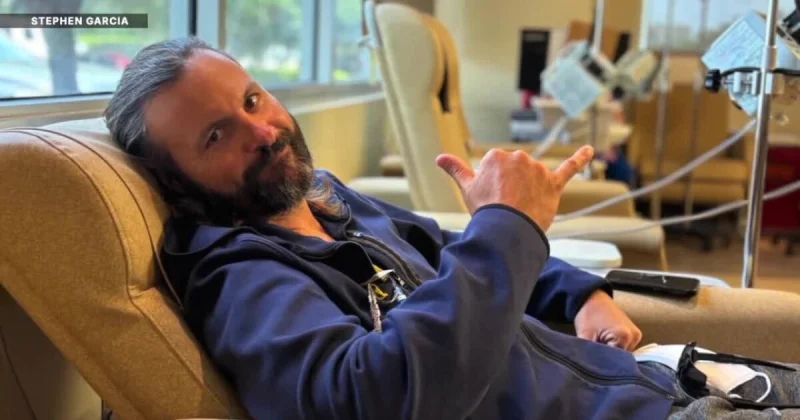
Stephen Garcia says doctors have found no evidence of disease after months of treatment for the stage 4 colon cancer that upended his year. The 38-year-old said he still has one more procedure scheduled for December, and doctors may decide on additional chemotherapy after that.
Garcia said the diagnosis started with subtle symptoms he first brushed off: sporadic abdominal pain and a change in bowel habits. He said an MRI found two lesions on the liver, then a colonoscopy found a tumor and a biopsy showed the findings were linked. That set off a treatment course that included six rounds of chemotherapy and five rounds of short pelvic radiation.

Dr. Allen Chudzinski said Garcia’s cancer had spread beyond the original organ and into the liver, multiple organs and parts of the abdominal cavity. Chudzinski performed surgery to remove the cancer from Garcia’s colon, and Garcia also had surgery to remove tumors on his liver and a cancerous nodule on his lung. The no-evidence-of-disease result is the strongest sign yet that the treatment worked, but it does not end the medical story.
That is because the next step still matters. Garcia said he has one more procedure scheduled for December, and Chudzinski said he may receive a few more courses of intravenous chemotherapy after his ostomy takedown heals, a precaution meant to destroy any cells that might still be circulating. Garcia said he stayed focused by telling himself every day that he would beat it.
Chudzinski also used Garcia’s case to stress screening, saying colonoscopy starts at age 45 for everyone unless a family history requires earlier testing. He said if a relative was diagnosed at 50, screening should begin 10 years earlier at 40, and he warned not to ignore symptoms. For Garcia, the headline is encouraging, but the final medical chapter is still ahead.