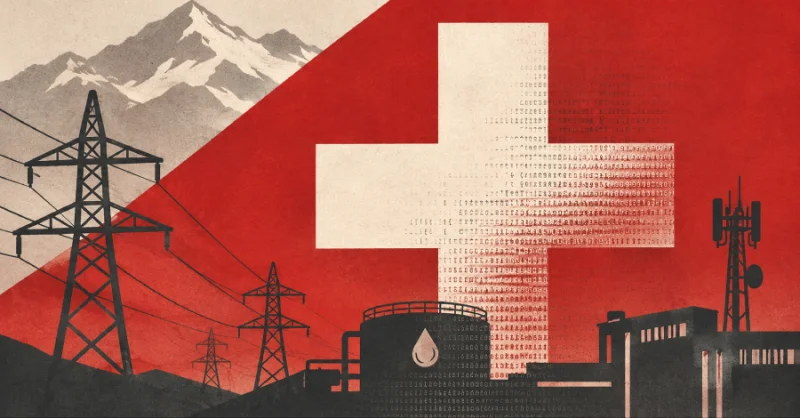
Switzerland's National Cyber Security Centre said attackers using AI agents broke into computer systems in four of five confirmed cyberattacks on Swiss organizations, including three attacks on critical infrastructure operators. Florian Schütz gave the figures in an interview with public broadcaster SRF this week, putting a sharper number on a problem the agency first flagged on Tuesday.
The timing matters because this is the first confirmed case of an AI cyberattack on Swiss organizations the agency has described publicly, and it reaches beyond small and medium-sized companies to operators that keep essential services running. The agency said no major disruptions were reported, but it also said the tools can find security weaknesses and carry out attacks on their own, which makes the pace of intrusion the issue as much as the damage.
Schütz's count also narrows an earlier advisory that said the agents had compromised victims' IT systems in every case known at that point. By this week, the agency was talking about five reported cases, with four confirmed attacks involving AI agents and three attacks aimed at critical infrastructure operators in at least two sectors. The victims were not named, and the organizations that came forward did so voluntarily.
That gap matters because the advisory and the interview do not line up neatly. The first notice was broad and urgent, warning that the cases represented a shift in the cyber threat landscape. The later figure was more precise, but it still left open who was behind the attacks and which operators were hit, even as Switzerland said the targeted infrastructure included providers in sectors such as electricity, drinking water and telecommunications.
The wider pattern is what makes the warning harder to dismiss. The agency said the agents are often used to scan for known, unpatched weaknesses, misconfigurations and weak authentication, then switch methods when defenses respond. It said the tools can run many attacks in parallel, and recent advisories from Britain and Italy describe the same kind of mass compromise campaign, with autonomous agents adapting within seconds and moving without human input. For Switzerland, the next question is not whether the tools exist. It is how many more operators will have to come forward before the full map of the attacks becomes clear.