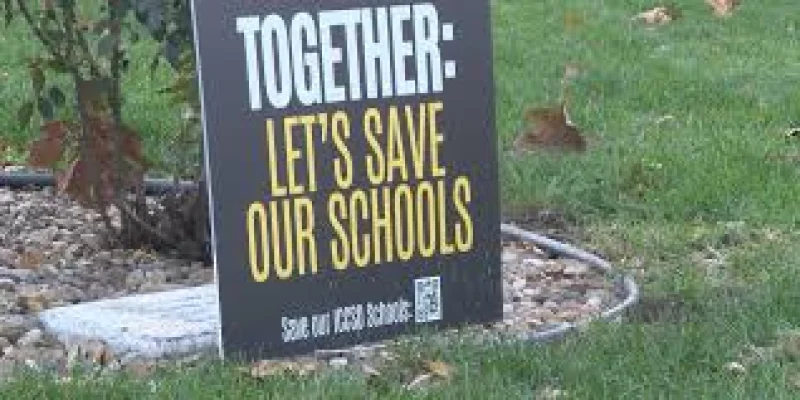
The Iowa City Community School District has put forward three concepts that could close up to seven elementary schools and redraw attendance boundaries as it looks for ways to trim about $32.5 million over four years. The changes are not final, but they could reshape where children go to school and how far some families have to travel.
The district says the three ideas could save anywhere from $3.7 million to more than $11 million, with each proposal carrying a different mix of closures. One plan would close as many as seven elementary schools and save an estimated $6.5 million to $10.9 million. A second would close four elementary schools and two middle schools and save $6.3 million to $11.4 million. The third would close four elementary schools and save $3.7 million to $6.5 million.
That money matters now because the district is losing nearly 300 students this school year and expects enrollment to fall further. Leaders have said they need major changes to address the financial shortfall, and the proposals are meant to be part of that effort. Public input sessions are set for January, and a board vote is expected in February.

For families, the plans are already landing hard. Donna Moore has two grandchildren at Coralville Central Elementary, one in kindergarten and one in second grade, and she said the thought of a closure is hard to absorb because children may immediately fear losing their school. “They immediately would think, oh no, I’m going to lose my school. So we don’t talk about it with the kids,” she said. Moore added that the proposals are “quite scary.” Coralville Central Elementary could close under the first plan.
Chelsea Green, president of the Kirkwood Elementary PTO, said families around another school affected by the proposals are bracing for a change that may reach beyond buildings and bus routes. “There’s very few schools I think are truly safe, and I think the rest of us are just kind of holding our breath,” she said. Green also raised the effect on children’s well-being, saying she wants to know how the district will prioritize mental health for students dealing with things that are “really scary and real.”
The district says none of the plans is final and that feedback will be taken into account before the vote. But the range of options shows how broad the reset could be: one concept centered on the largest number of elementary closures, another paired elementary and middle school shutdowns, and a third focused on elementary schools alone. For families like Moore’s, the key question is not whether the district is still listening. It is which schools will still be standing when February comes.