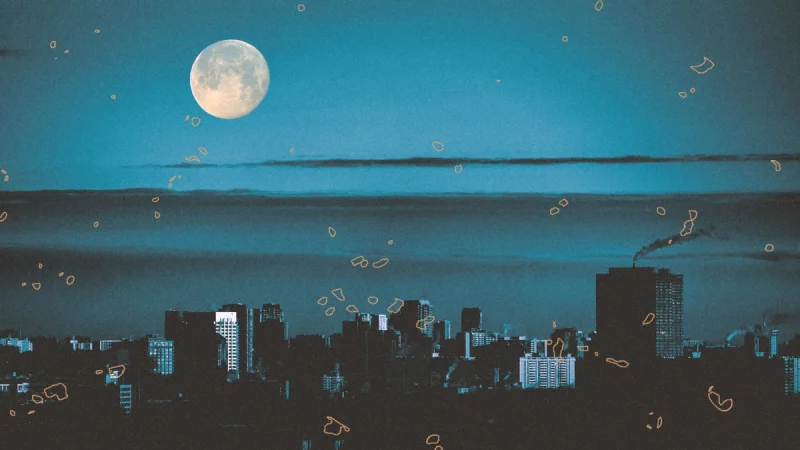
The Moon is nearly full on Monday, Nov. 23, but it has not quite reached the finish line. It is in the Waxing Gibbous phase and 97% of its surface is visible, with the next Full Moon set for November 24.
That makes tonight a prime check-in for skywatchers who want to know how close the lunar cycle has come to its brightest point. The cycle runs roughly every 29.5 days, moving from a New Moon to a Full Moon and then back again, which is why the Moon can look nearly complete before it is technically full. A similar close-up of the sky's changing face appeared in an earlier Moon Phase Today update, when the Moon was described as a Waxing Gibbous Moon at 88% lit before a June 29 Full Moon.

Lois Mackenzie’s readout gives a simple answer with a precise edge: the Moon looks full now, but the calendar still keeps one more step in place. That gap is small, yet it matters because the shift from 97% illumination to a true Full Moon is what marks the end of this stretch of brightening light.
The near-full Moon also rewards a second look. Mares Tranquillitatis and Fecunditatis can be seen without visual aids, along with the Aristarchus Plateau. With binoculars, the Grimaldi Basin, the Endymion Crater and the Mare Nectaris come into view, while a telescope can reveal the Apollo 11, Apollo 15 and Apollo 16 landing spots. The Moon may be almost full, but it is still changing, and that is exactly what makes tonight worth watching.
For readers tracking the Moon Phase closely, the next date is the one that settles the question: November 24 is the Full Moon. Until then, the Moon remains a Waxing Gibbous Moon, bright enough to look complete and close enough to remind skywatchers that the final step is still ahead.