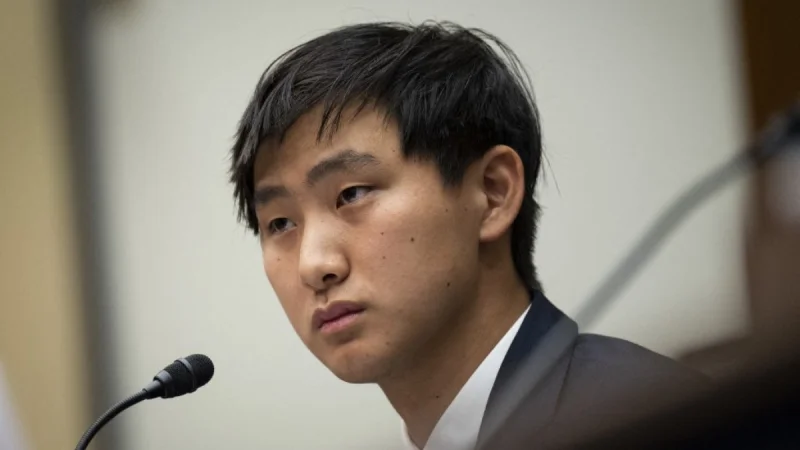
Alexandr Wang said on Sunday that superintelligence is arriving, and he warned that the next year may decide whether humanity keeps control of the technology or gives too much of society away to AI. The 29-year-old’s message landed as one of the clearest public alarms yet from a top AI executive inside Meta.
Wang tied that warning to a claim from an employee at Anthropic that Claude had been used to solve the Riemann hypothesis, a breakthrough he said dwarfed any human achievement for sheer intellectual might. In his view, that kind of jump is not a distant theory. It is a sign that the field is moving fast enough to matter now, not later.
He said emerging AI models will be clearly superhuman at improving themselves and will massively accelerate research in biology, armaments and economics. Once that happens, he said, it becomes unlikely that humankind will be able to control an AI system that is capable of unconstrained recursive self-improvement, or one that is 1000x smarter and more capable than humans in every field. In plain terms, recursive self-improvement means a system gets good at making itself better, then uses that advantage to improve again, with less and less human help.
That warning carries more weight because Wang did not frame it as a call to slow everything down. He said the scientific and technical problems on capability progress are likely solved, and that the industry must now move just as urgently on safety, alignment and security. He also said the goal should be a positive future for humanity in which all humans have greater agency and empowerment, not a handover of society to AI.
The position is notable inside Meta, where the public tone has often been more upbeat. Mark Zuckerberg wrote in an essay published in August that AI discussions were filled with doom and argued that the technology should lead to more people sharing greater prosperity, health and freedom. Wang, who co-founded Scale AI before joining Meta as its first chief AI officer last year, is now pushing a darker interpretation of the same technological race from inside the company.
That split reflects a broader fight in Silicon Valley over where frontier AI is headed and how much control humans will still have if systems start improving themselves. AI safety advocates have long treated recursive self-improvement as a tipping point, because once a system can meaningfully redesign its own capabilities, the balance of power may move too quickly for human oversight to keep up. Wang’s warning does not answer whether that point is already close, but it makes clear he thinks the next year will matter far more than the industry is saying out loud.